digging deeper: road design\npart 2: neighborhoods\ncity planning affects many aspects of a citizens daily…
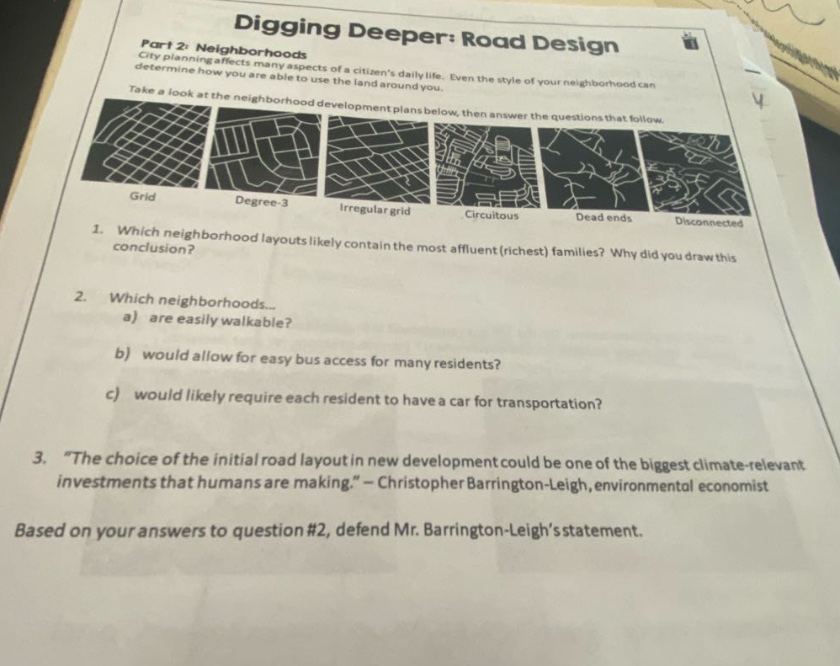
digging deeper: road design\npart 2: neighborhoods\ncity planning affects many aspects of a citizens daily life. even the style of your neighborhood can determine how you are able to use the land around you.\ntake a look at the neighborhood development plans below, then answer the questions that follow.\ngrid degree - 3 irregular grid circuitous dead ends disconnected\n1. which neighborhood layouts likely contain the most affluent (richest) families? why did you draw this conclusion?\n2. which neighborhoods...\na) are easily walkable?\nb) would allow for easy bus access for many residents?\nc) would likely require each resident to have a car for transportation?\n3. “the choice of the initial road layout in new development could be one of the biggest climate - relevant investments that humans are making.” - christopher barrington - leigh, environmental economist\nbased on your answers to question #2, defend mr. barrington - leigh’s statement.
Answer
Brief Explanations:
- For the first question, dead - end and disconnected layouts may attract wealthier families as they often offer more privacy and exclusivity.
- a) Grid and irregular grid layouts are easily walkable as they provide a network of paths. b) Grid layouts allow for easy bus access as they have a regular pattern. c) Dead - end and disconnected layouts likely require residents to have cars as public transportation may be limited.
- If layouts that require cars (dead - end and disconnected) are chosen, more carbon emissions will result from individual car use. Walkable and bus - accessible layouts (grid and irregular grid) reduce reliance on cars, thus having a positive climate impact.
Answer:
- Dead - end and disconnected layouts may contain the most affluent families due to privacy.
- a) Grid, Irregular grid b) Grid c) Dead - ends, Disconnected
- Layouts that require cars increase emissions, while walkable and bus - accessible ones reduce them, supporting the statement.