examine the photographic image above. which of the following is true?\na. this is an example of a…
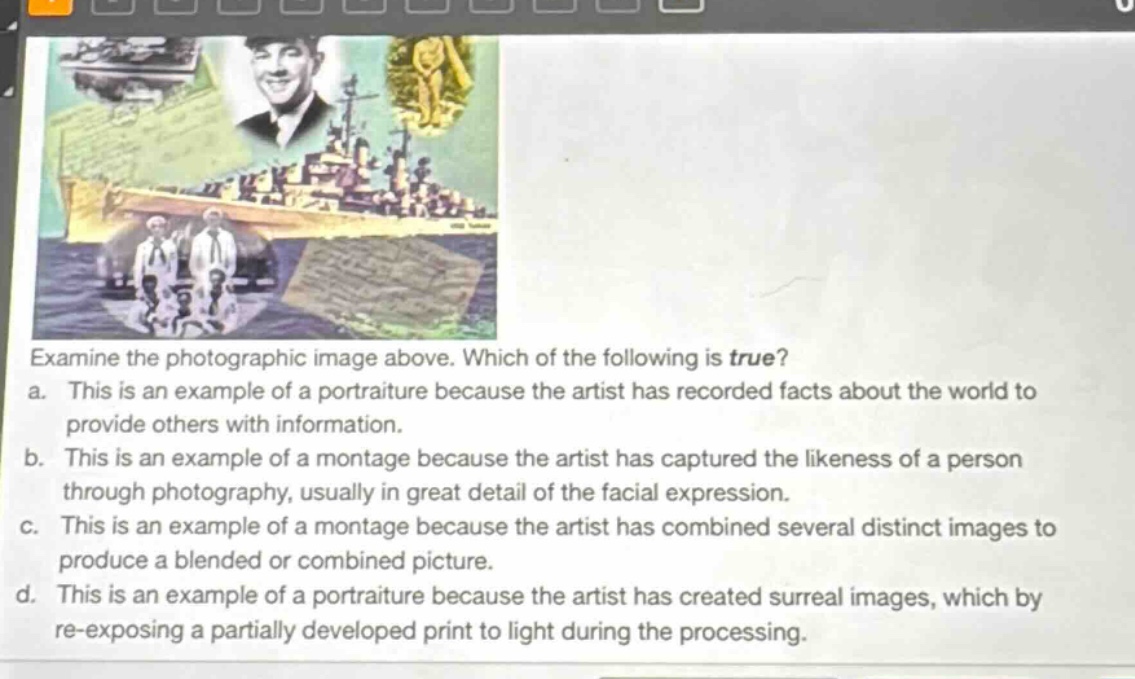
examine the photographic image above. which of the following is true?\na. this is an example of a portraiture because the artist has recorded facts about the world to provide others with information.\nb. this is an example of a montage because the artist has captured the likeness of a person through photography, usually in great detail of the facial expression.\nc. this is an example of a montage because the artist has combined several distinct images to produce a blended or combined picture.\nd. this is an example of a portraiture because the artist has created surreal images, which by re - exposing a partially developed print to light during the processing.
Answer
Answer:
C. This is an example of a montage because the artist has combined several distinct images to produce a blended or combined picture.
Brief Explanations:
The image combines multiple separate images, which defines a montage. Portraiture focuses on a single - person likeness and the described re - exposure process is not applicable here.