follow up questions: 1) there are approximately 130 sites on this aml/npl list, although a few sites are…
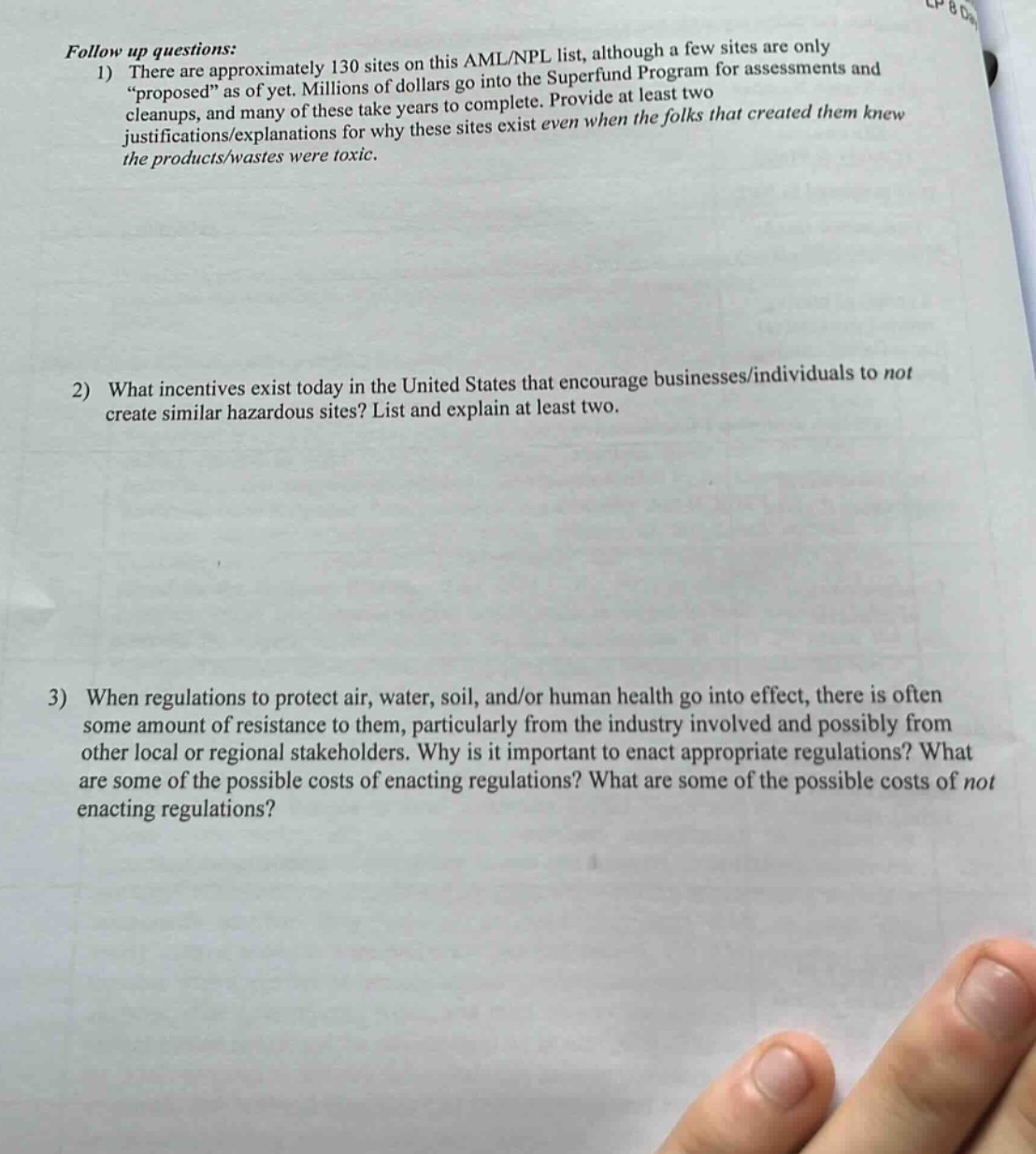
follow up questions: 1) there are approximately 130 sites on this aml/npl list, although a few sites are only “proposed” as of yet. millions of dollars go into the superfund program for assessments and cleanups, and many of these take years to complete. provide at least two justifications/explanations for why these sites exist even when the folks that created them knew the products/wastes were toxic. 2) what incentives exist today in the united states that encourage businesses/individuals to not create similar hazardous sites? list and explain at least two. 3) when regulations to protect air, water, soil, and/or human health go into effect, there is often some amount of resistance to them, particularly from the industry involved and possibly from other local or regional stakeholders. why is it important to enact appropriate regulations? what are some of the possible costs of enacting regulations? what are some of the possible costs of not enacting regulations?
Answer
Brief Explanations:
- Explanation for existence of hazardous sites:
- Profit - driven behavior: Companies may have prioritized short - term profits over long - term environmental and health impacts. They knew the toxicity but continued operations as the cost of compliance was seen as higher than potential future liabilities.
- Lack of strict early regulations: In the past, environmental regulations were less strict or not well - enforced, allowing companies to operate without proper safeguards.
- Incentives to not create hazardous sites:
- Tax incentives for green practices: The government may offer tax breaks to businesses that adopt environmentally friendly production methods, reducing the likelihood of creating hazardous waste. This encourages companies to invest in cleaner technologies to save on taxes.
- Subsidies for waste management: Subsidies can be provided for proper waste disposal and treatment. This makes it more cost - effective for businesses to handle waste safely rather than creating hazardous sites through improper disposal.
- Importance of regulations:
- Protecting public health: Regulations safeguard air, water, and soil quality, which directly impacts human health by reducing exposure to harmful pollutants.
- Environmental conservation: They help preserve natural ecosystems and biodiversity.
- Possible costs of enacting regulations:
- Compliance costs for industry: Businesses may need to invest in new equipment, processes, or personnel to meet regulatory requirements, which can increase production costs.
- Potential job losses in the short - term: Some industries may downsize or restructure to comply, leading to temporary job losses.
- Possible costs of not enacting regulations:
- Healthcare costs: Higher incidences of pollution - related diseases would increase healthcare expenses for individuals and the government.
- Environmental degradation: Long - term damage to natural resources, such as soil infertility, water scarcity, and loss of wildlife habitats, which can have far - reaching economic and social consequences.
Answer:
- Profit - driven behavior, lack of strict early regulations.
- Tax incentives for green practices, subsidies for waste management.
- Importance: Protecting public health, environmental conservation. Costs of enacting: Compliance costs for industry, potential job losses in the short - term. Costs of not enacting: Healthcare costs, environmental degradation.