which of the following is not true of christian art after the edict of milan?\na. the art included christian…
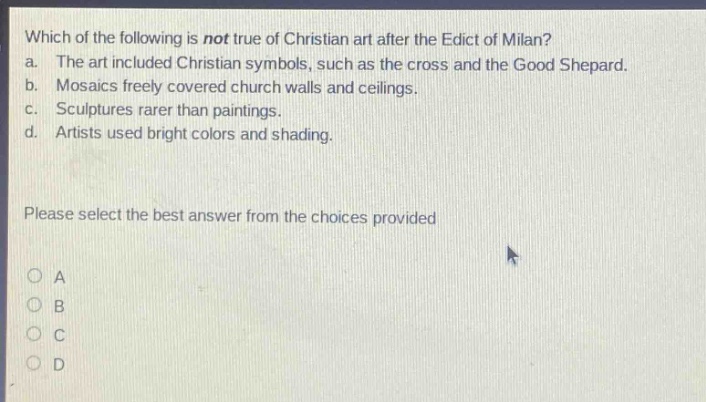
which of the following is not true of christian art after the edict of milan?\na. the art included christian symbols, such as the cross and the good shepard.\nb. mosaics freely covered church walls and ceilings.\nc. sculptures rarer than paintings.\nd. artists used bright colors and shading.\nplease select the best answer from the choices provided\no a\no b\no c\no d
Answer
Brief Explanations:
After the Edict of Milan, Christian art incorporated symbols like the cross and Good Shepherd (a is true). Mosaics were commonly used to cover church walls and ceilings (b is true). Artists also employed bright colors and shading techniques (d is true). However, sculptures were not rarer than paintings; both were important forms of Christian art. So, c is not true.
Answer:
C. Sculptures rarer than paintings.