9. all of the following are true regarding the use of a thermometer in food service except: use a shatter…
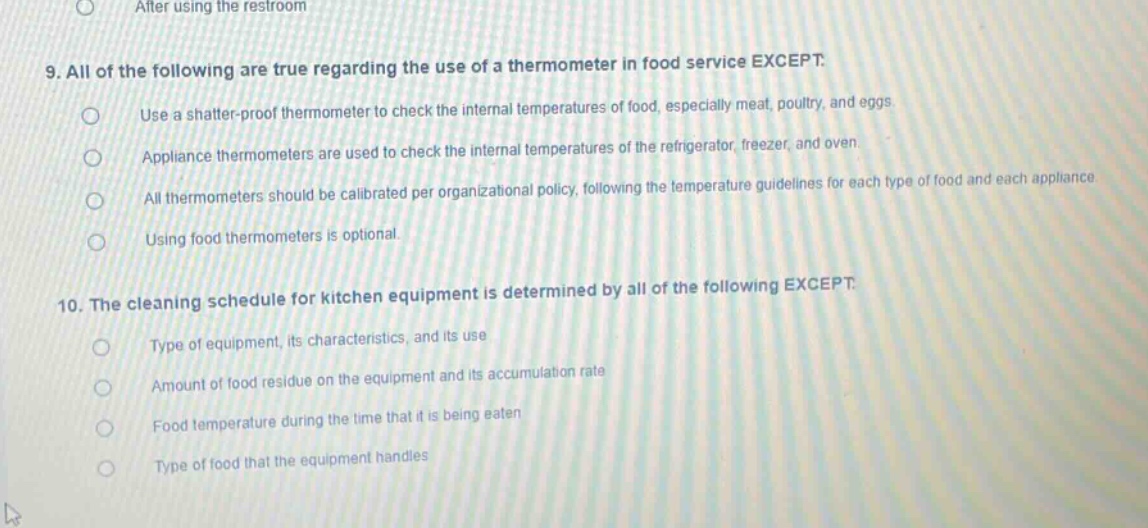
9. all of the following are true regarding the use of a thermometer in food service except: use a shatter - proof thermometer to check the internal temperatures of food, especially meat, poultry, and eggs. appliance thermometers are used to check the internal temperatures of the refrigerator, freezer, and oven. all thermometers should be calibrated per organizational policy, following the temperature guidelines for each type of food and each appliance. using food thermometers is optional. 10. the cleaning schedule for kitchen equipment is determined by all of the following except: type of equipment, its characteristics, and its use. amount of food residue on the equipment and its accumulation rate. food temperature during the time that it is being eaten. type of food that the equipment handles.
Answer
Brief Explanations:
- In food - service, using food thermometers is crucial for food safety to ensure proper cooking and storage temperatures, so it is not optional.
- The food temperature during eating has no direct relation to determining the cleaning schedule of kitchen equipment. Other factors like equipment type, residue amount, and food type handled do.
Answer:
- Using food thermometers is optional.
- Food temperature during the time that it is being eaten