1. what is the fundamental principle behind hydropower, and how does it convert the energy of flowing water…
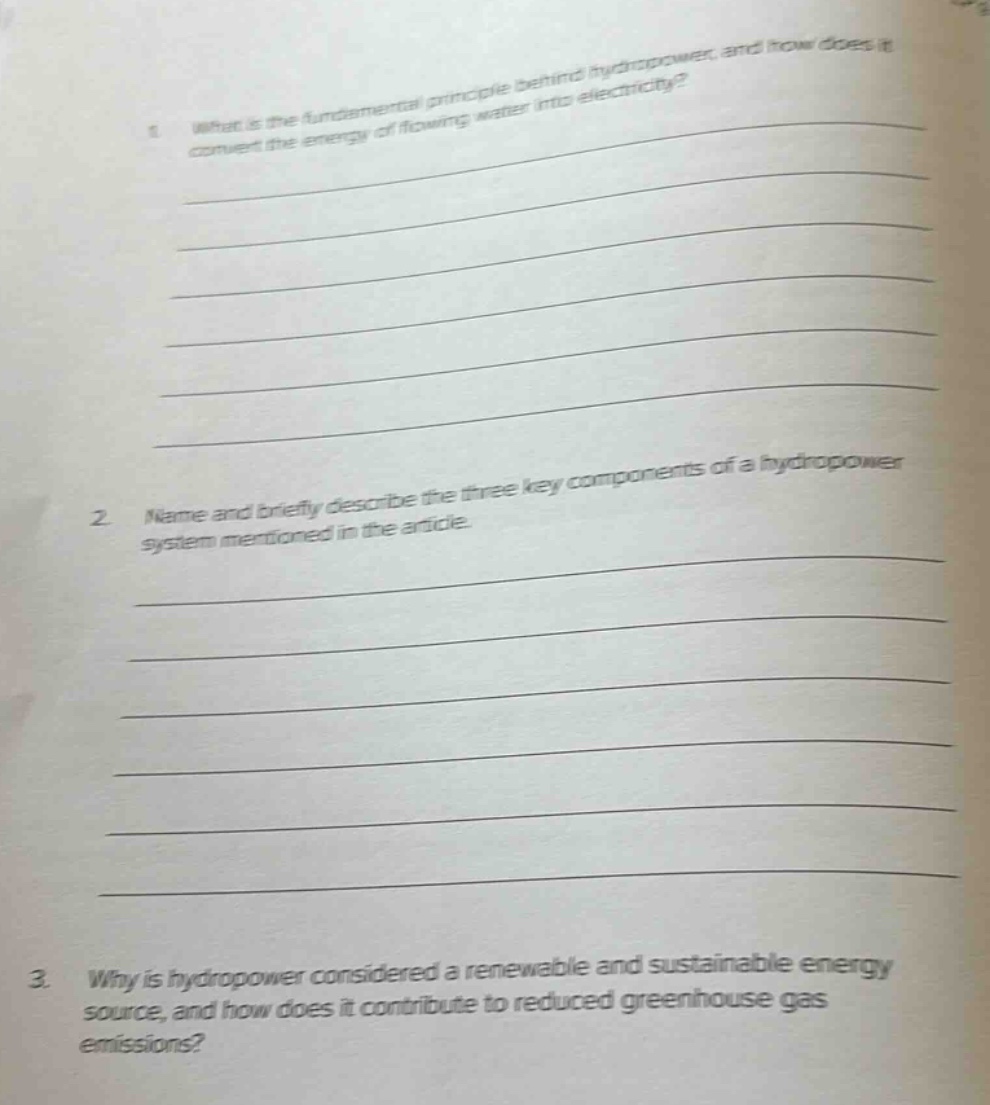
1. what is the fundamental principle behind hydropower, and how does it convert the energy of flowing water into electricity?\n2. name and briefly describe the three key components of a hydropower system mentioned in the article.\n3. why is hydropower considered a renewable and sustainable energy source, and how does it contribute to reduced greenhouse gas emissions?
Answer
Brief Explanations:
- Hydro - power is based on the principle of electromagnetic induction. Flowing water turns turbines which are connected to generators. The rotating turbines cause a change in magnetic flux in the generator coils, inducing an electric current.
- Three key components of a hydropower system are: Dam - holds back water creating a head of water; Turbine - converts the kinetic energy of falling water into mechanical energy; Generator - converts the mechanical energy from the turbine into electrical energy.
- Hydropower is renewable as water is part of the natural water cycle and replenished constantly. It is sustainable as it doesn't deplete natural resources. It contributes to reduced greenhouse gas emissions as it doesn't burn fossil fuels during electricity generation, thus avoiding the release of carbon - dioxide and other pollutants.
Answer:
- The fundamental principle is electromagnetic induction. Flowing water turns turbines connected to generators, inducing an electric current.
- Dam: Holds back water to create a head. Turbine: Converts kinetic energy of water to mechanical energy. Generator: Converts mechanical energy to electrical energy.
- It is renewable due to the water cycle and sustainable as it doesn't deplete resources. It reduces emissions as it doesn't burn fossil fuels.