a glacier covered the land bordering an ocean. sand, mud, and boulders were deposited by the glacier. over…
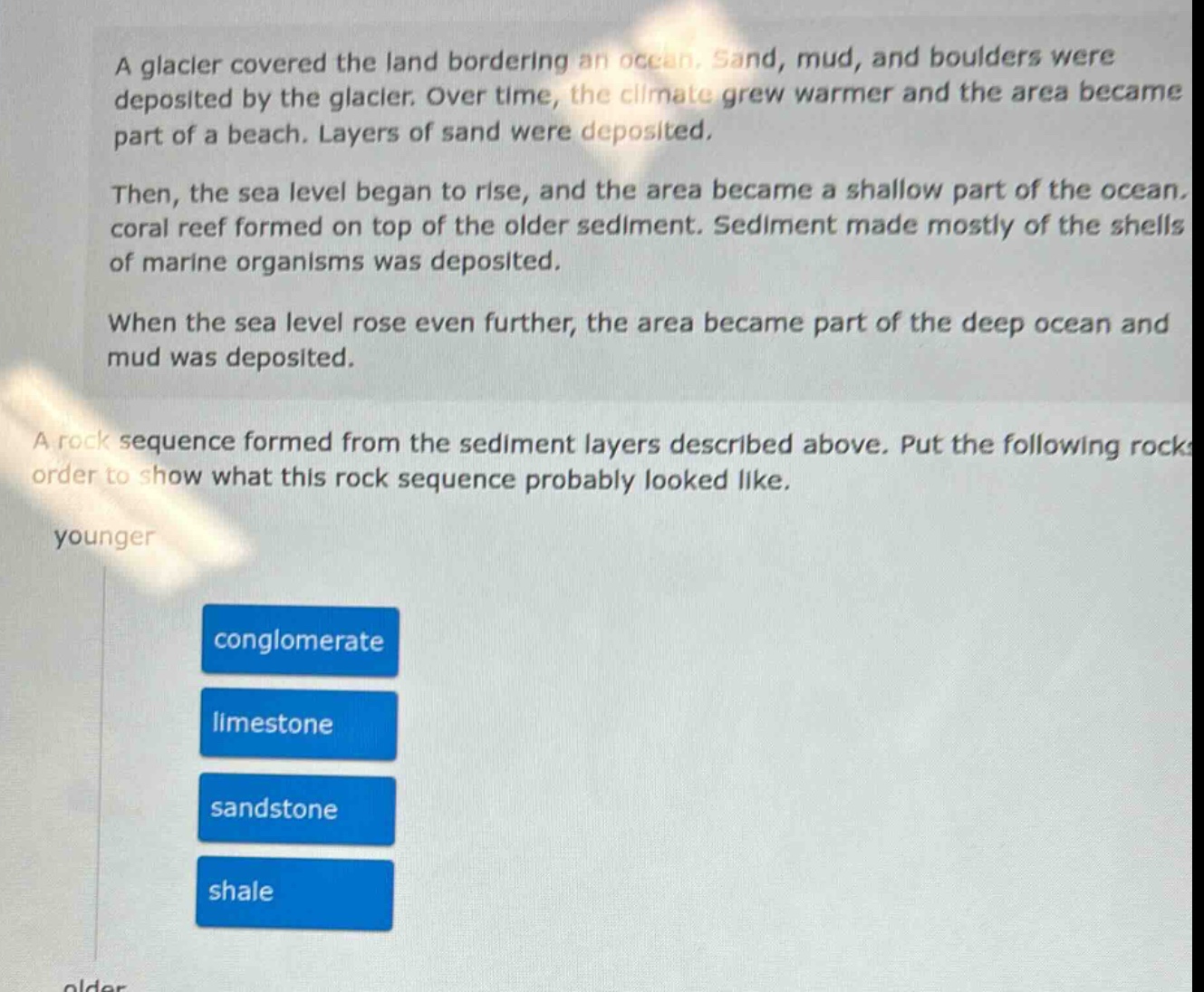
a glacier covered the land bordering an ocean. sand, mud, and boulders were deposited by the glacier. over time, the climate grew warmer and the area became part of a beach. layers of sand were deposited. then, the sea level began to rise, and the area became a shallow part of the ocean. coral reef formed on top of the older sediment. sediment made mostly of the shells of marine organisms was deposited. when the sea level rose even further, the area became part of the deep ocean and mud was deposited. a rock sequence formed from the sediment layers described above. put the following rocks in order to show what this rock sequence probably looked like. younger conglomerate limestone sandstone shale older
Answer
Explanation:
Step1: Identify rock - sediment relationships
Conglomerate is formed from boulders, sand, and mud (deposited by glacier first), so it is the oldest among these in this sequence.
Step2: Consider beach sediment
Sandstone is formed from layers of sand deposited when the area was a beach, so it is younger than conglomerate.
Step3: Analyze shallow - ocean sediment
Limestone is formed from the shells of marine organisms and coral reefs in shallow - ocean environments, so it is younger than sandstone.
Step4: Determine deep - ocean sediment
Shale is formed from mud deposited in deep - ocean environments, so it is the youngest.
Answer:
conglomerate, sandstone, limestone, shale (from older to younger)