glossopteris was a type of plant that lived during the time of the dinosaurs. fossils of the plant have been…
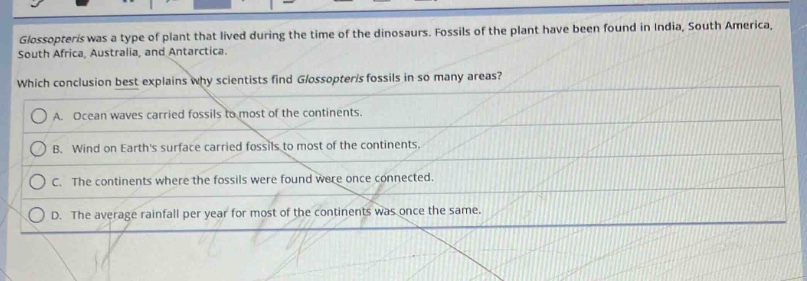
glossopteris was a type of plant that lived during the time of the dinosaurs. fossils of the plant have been found in india, south america, south africa, australia, and antarctica. which conclusion best explains why scientists find glossopteris fossils in so many areas? a. ocean waves carried fossils to most of the continents. b. wind on earths surface carried fossils to most of the continents. c. the continents where the fossils were found were once connected. d. the average rainfall per year for most of the continents was once the same.
Answer
Brief Explanations:
The distribution of Glossopteris fossils across widely - separated continents is best explained by the theory of continental drift. When the continents were once connected as a single landmass (Pangaea), plants like Glossopteris could spread across it. After the continents drifted apart, the fossils were left on the now - separate landmasses. Ocean waves and wind are not sufficient to carry heavy fossils across vast ocean basins, and rainfall has no relation to fossil distribution.
Answer:
C. The continents where the fossils were found were once connected.