8. haileys microaggressions and eventual estrangement from starr exemplify which of the novels central…
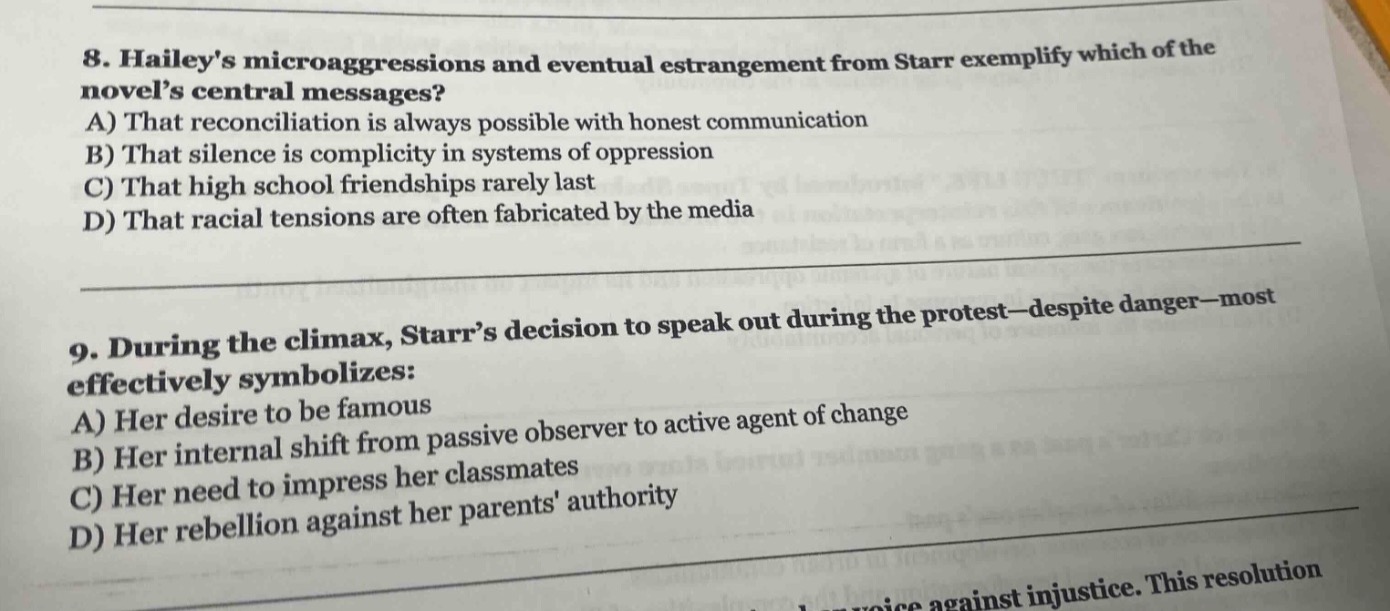
8. haileys microaggressions and eventual estrangement from starr exemplify which of the novels central messages? a) that reconciliation is always possible with honest communication b) that silence is complicity in systems of oppression c) that high school friendships rarely last d) that racial tensions are often fabricated by the media 9. during the climax, starrs decision to speak out during the protest—despite danger—most effectively symbolizes: a) her desire to be famous b) her internal shift from passive observer to active agent of change c) her need to impress her classmates d) her rebellion against her parents authority
Answer
Brief Explanations:
For question 8, Hailey's microaggressions and estrangement show that silence in the face of oppression (through her actions) implies complicity. For question 9, Starr speaking out during the protest despite danger represents a shift from passively observing to actively working for change.
Answer:
- B. That silence is complicity in systems of oppression
- B. Her internal shift from passive observer to active agent of change