6. the historical period following the fall of rome is known as the __________. a) enlightenment b) stone…
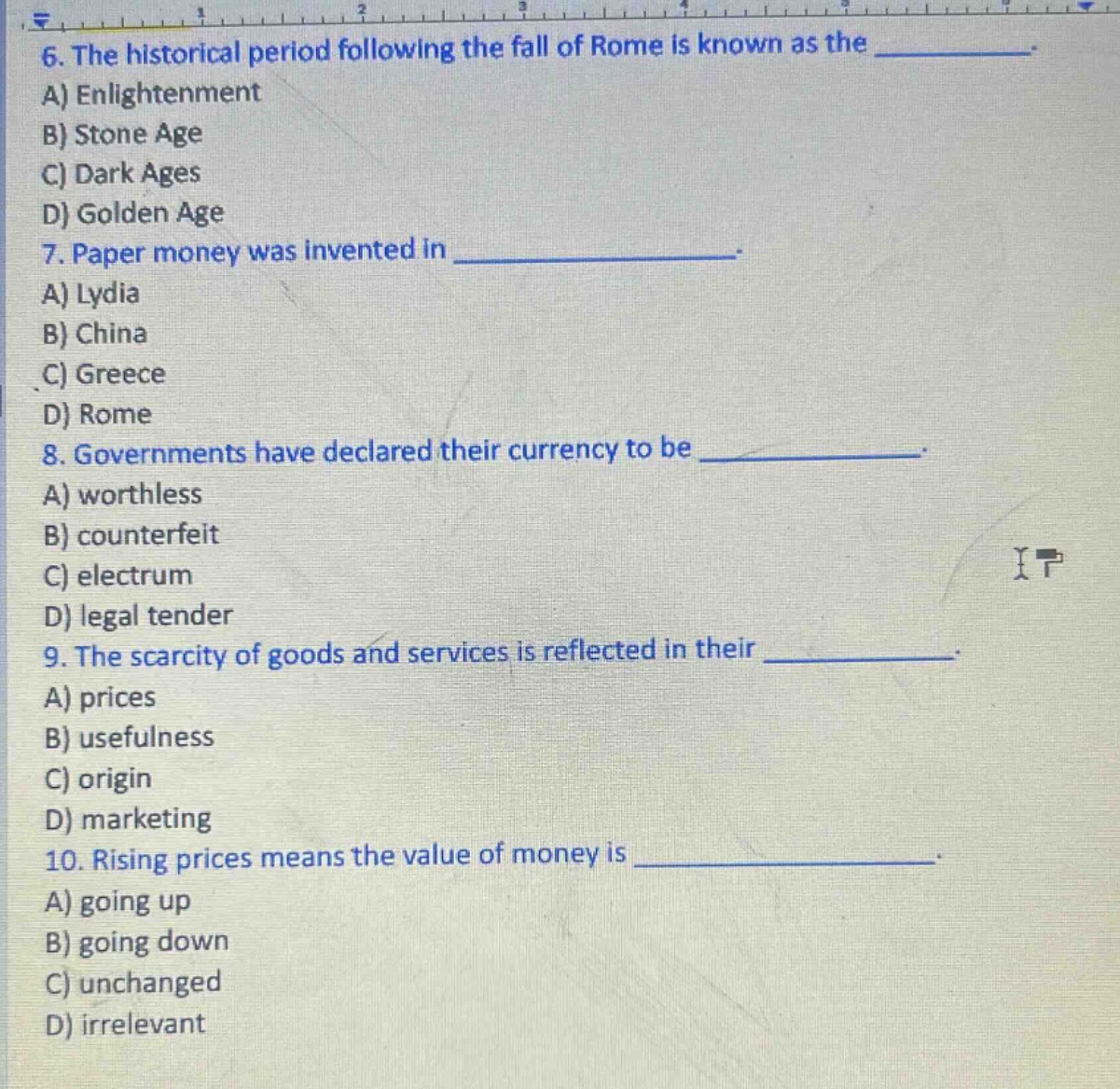
6. the historical period following the fall of rome is known as the __________. a) enlightenment b) stone age c) dark ages d) golden age 7. paper money was invented in __________. a) lydia b) china c) greece d) rome 8. governments have declared their currency to be __________. a) worthless b) counterfeit c) electrum d) legal tender 9. the scarcity of goods and services is reflected in their __________. a) prices b) usefulness c) origin d) marketing 10. rising prices means the value of money is __________. a) going up b) going down c) unchanged d) irrelevant
Answer
Brief Explanations:
- For question 6, the period after the fall of Rome is commonly called the Dark Ages.
- For question 7, paper - money was first invented in China.
- For question 8, governments declare their currency as legal tender.
- For question 9, the scarcity of goods and services is reflected in their prices.
- For question 10, when prices rise, the value of money goes down.
Answer:
- C. Dark Ages
- B. China
- D. legal tender
- A. prices
- B. going down