if a house is green, then it has a white door. if the given statement is true, then which other statement…
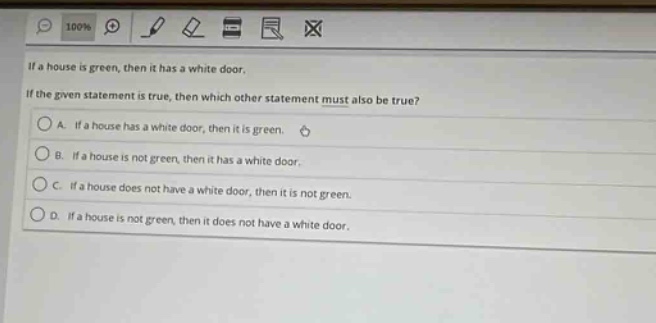
if a house is green, then it has a white door. if the given statement is true, then which other statement must also be true? a. if a house has a white door, then it is green. b. if a house is not green, then it has a white door. c. if a house does not have a white door, then it is not green. d. if a house is not green, then it does not have a white door.
Answer
Brief Explanations:
La proposición original es "Si una casa es verde, entonces tiene una puerta blanca". La contra - positiva de una proposición condicional "Si p, entonces q" es "Si no q, entonces no p". En este caso, p es "una casa es verde" y q es "tiene una puerta blanca". La contra - positiva es "Si una casa no tiene una puerta blanca, entonces no es verde". Una proposición y su contra - positiva son lógicamente equivalentes.
Answer:
C. If a house does not have a white door, then it is not green.