7. identify the converse of the statement: if you study in front of the tv, then you do not score well on…
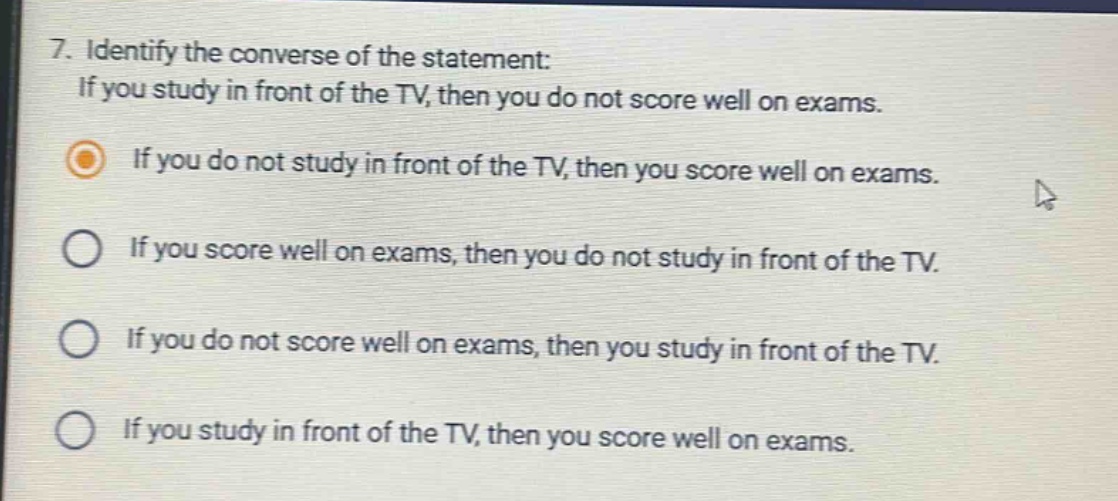
7. identify the converse of the statement: if you study in front of the tv, then you do not score well on exams. if you do not study in front of the tv, then you score well on exams. if you score well on exams, then you do not study in front of the tv. if you do not score well on exams, then you study in front of the tv. if you study in front of the tv, then you score well on exams.
Answer
Brief Explanations:
In logic, the converse of a conditional statement "If p, then q" is "If q, then p". Here, p is "you study in front of the TV" and q is "you do not score well on exams". So the converse is "If you score well on exams, then you do not study in front of the TV".
Answer:
B. If you score well on exams, then you do not study in front of the TV.