igneous rocks are formed from cooling lava or magma forced to the surface by volcanoes. different types of…
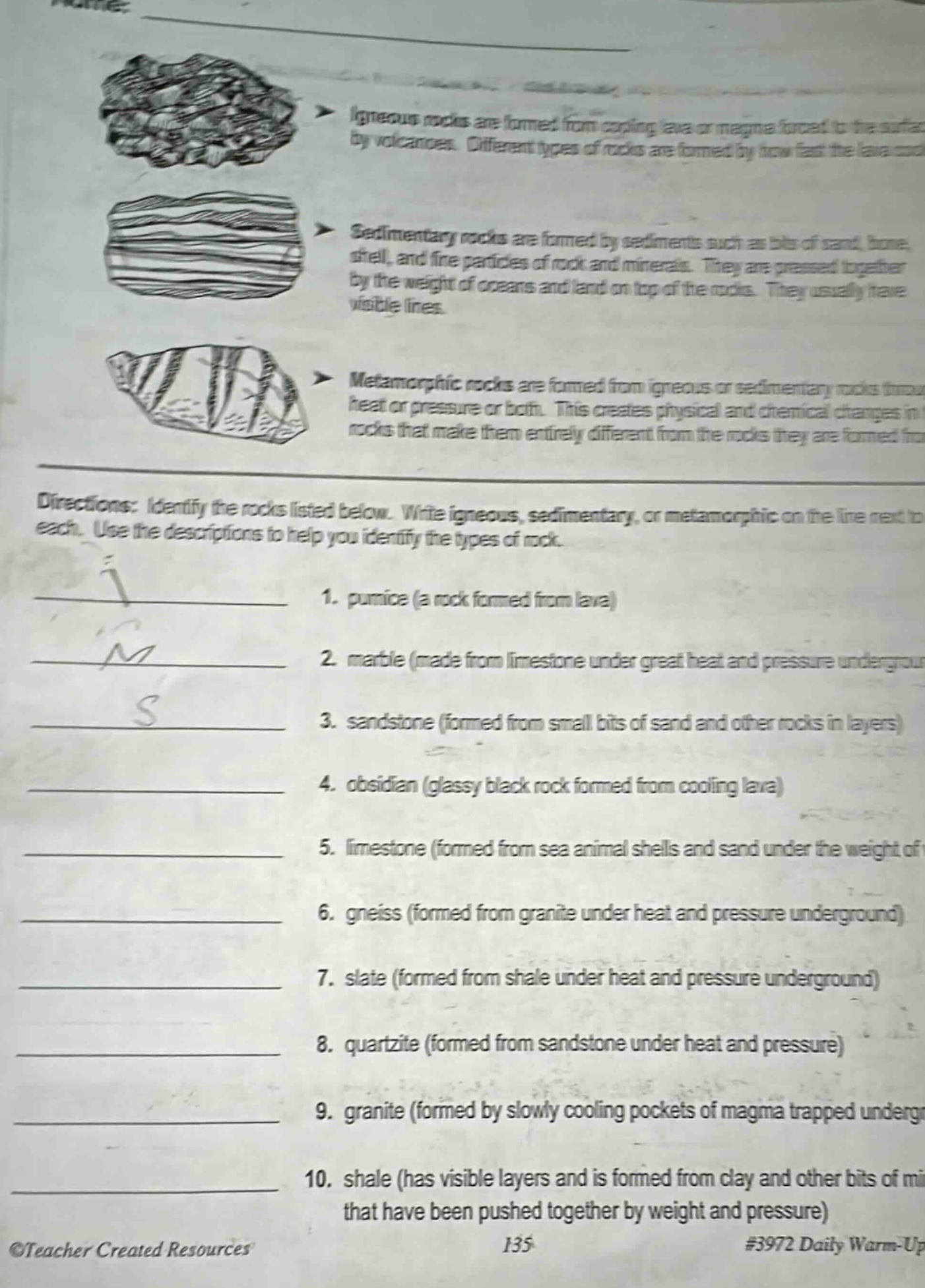
igneous rocks are formed from cooling lava or magma forced to the surface by volcanoes. different types of rocks are formed by how fast the lava cools. sedimentary rocks are formed by sediments such as bits of sand, bone, shell, and fine particles of rock and minerals. they are pressed together by the weight of oceans and land on top of the rocks. they usually have visible lines. metamorphic rocks are formed from igneous or sedimentary rocks through heat or pressure or both. this creates physical and chemical changes in rocks that make them entirely different from the rocks they are formed from. directions: identify the rocks listed below. write igneous, sedimentary, or metamorphic on the line next to each. use the descriptions to help you identify the types of rock. 1. pumice (a rock formed from lava) 2. marble (made from limestone under great heat and pressure underground) 3. sandstone (formed from small bits of sand and other rocks in layers) 4. obsidian (glassy black rock formed from cooling lava) 5. limestone (formed from sea animal shells and sand under the weight of 6. gneiss (formed from granite under heat and pressure underground) 7. slate (formed from shale under heat and pressure underground) 8. quartzite (formed from sandstone under heat and pressure) 9. granite (formed by slowly cooling pockets of magma trapped underground) 10. shale (has visible layers and is formed from clay and other bits of matter that have been pushed together by weight and pressure) ©teacher created resources 135 #3972 daily warm - up
Answer
Brief Explanations:
- Pumice is formed from lava, so it's igneous.
- Marble is made from limestone under heat and pressure, so it's metamorphic.
- Sandstone is formed from sediment layers, so it's sedimentary.
- Obsidian is formed from cooling lava, so it's igneous.
- Limestone is formed from sea - animal shells and sand under weight, so it's sedimentary.
- Gneiss is formed from granite under heat and pressure, so it's metamorphic.
- Slate is formed from shale under heat and pressure, so it's metamorphic.
- Quartzite is formed from sandstone under heat and pressure, so it's metamorphic.
- Granite is formed by cooling magma, so it's igneous.
- Shale has visible layers and is formed from sediment, so it's sedimentary.
Answer:
- Igneous
- Metamorphic
- Sedimentary
- Igneous
- Sedimentary
- Metamorphic
- Metamorphic
- Metamorphic
- Igneous
- Sedimentary