2. imagine you are an engineer whose personal moral belief conflicts with the engineering code of ethics…
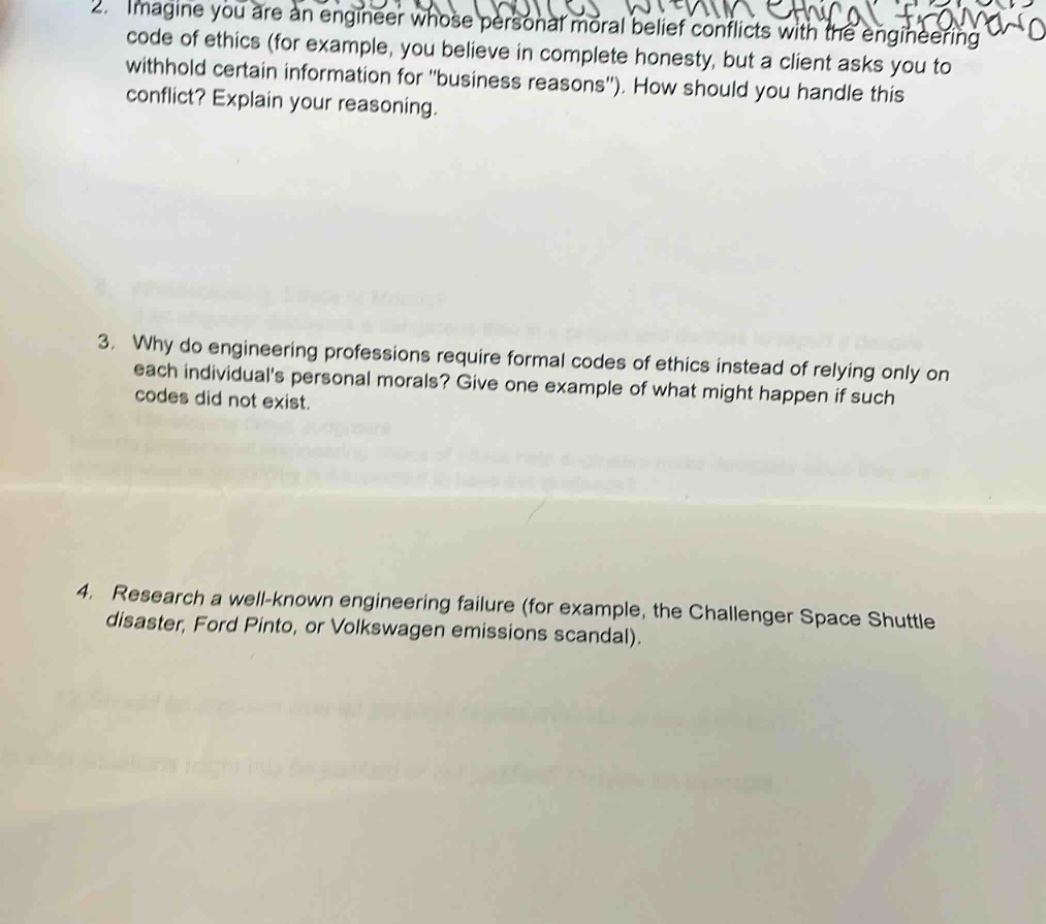
2. imagine you are an engineer whose personal moral belief conflicts with the engineering code of ethics (for example, you believe in complete honesty, but a client asks you to withhold certain information for \business reasons\). how should you handle this conflict? explain your reasoning.\n3. why do engineering professions require formal codes of ethics instead of relying only on each individuals personal morals? give one example of what might happen if such codes did not exist.\n4. research a well - known engineering failure (for example, the challenger space shuttle disaster, ford pinto, or volkswagen emissions scandal).
Answer
Brief Explanations:
- An engineer should uphold the engineering code of ethics. The code is designed to protect the public, ensure integrity in the profession, etc. In this case, complete honesty is in line with the broader ethical responsibility of an engineer, and business - related requests that compromise ethics should be refused. The engineer should communicate clearly with the client about the importance of ethical behavior.
- Engineering professions require formal codes of ethics because personal morals can vary widely among individuals. A formal code provides a consistent standard for the entire profession, ensuring public safety, trust, and professional integrity. For example, if formal codes did not exist, in a construction project, an engineer might cut corners for personal financial gain, leading to structural failures and endangering lives.
- For the Challenger Space Shuttle disaster, it was caused by a combination of technical and organizational factors. O - ring failures due to cold temperatures were a technical issue, and organizational pressures to launch despite known risks also played a role. This shows the importance of proper risk assessment, communication, and adherence to safety protocols in engineering projects.
Answer:
- Refuse the client's request and communicate the importance of ethical behavior based on the engineering code of ethics.
- To provide a consistent standard for the profession. Example: Structural failures in construction due to personal gain - related corner - cutting.
- The Challenger Space Shuttle disaster was due to O - ring failures and organizational pressures to launch.