4. what information is contained in a living will? 5. some restrictions that insurance providers use to…
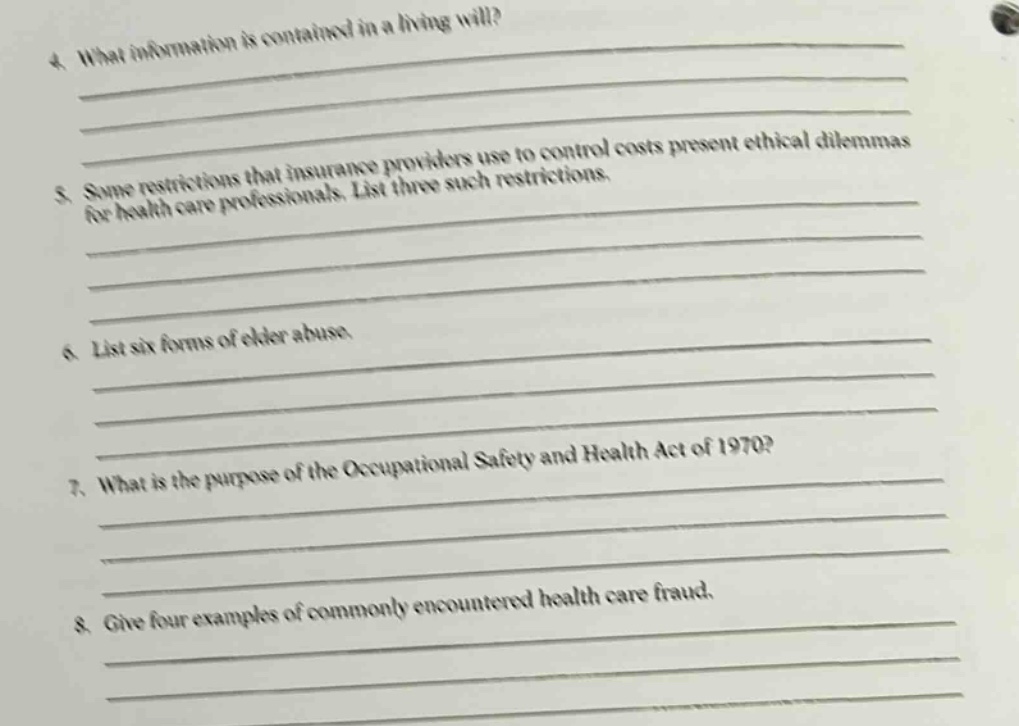
4. what information is contained in a living will? 5. some restrictions that insurance providers use to control costs present ethical dilemmas for health care professionals. list three such restrictions. 6. list six forms of elder abuse. 7. what is the purpose of the occupational safety and health act of 1970? 8. give four examples of commonly encountered health care fraud.
Answer
Brief Explanations:
- A living - will typically contains a person's wishes regarding medical treatment in the event they are unable to communicate, such as end - of - life care preferences like whether to receive life - sustaining treatments.
- Insurance providers may use restrictions like limiting the number of covered visits to a specialist, requiring pre - authorization for certain procedures, and imposing narrow networks of providers, which can pose ethical dilemmas for healthcare professionals.
- Six forms of elder abuse include physical abuse (hitting, etc.), emotional abuse (verbal insults), financial abuse (stealing money), neglect (failure to provide care), sexual abuse, and self - neglect (when the elder fails to care for themselves due to cognitive or other issues).
- The purpose of the Occupational Safety and Health Act of 1970 is to ensure safe and healthy working conditions by setting and enforcing standards and providing training, outreach, education, and assistance.
- Four examples of commonly encountered healthcare fraud are billing for services not rendered, up - coding (billing for a more expensive service than provided), kickbacks (illegal payments for referrals), and false claims for prescription drugs.
Answer:
- A person's wishes regarding medical treatment when unable to communicate, including end - of - life care preferences.
- Limiting number of specialist visits, requiring pre - authorization, imposing narrow provider networks.
- Physical abuse, emotional abuse, financial abuse, neglect, sexual abuse, self - neglect.
- To ensure safe and healthy working conditions through setting and enforcing standards and providing support.
- Billing for services not rendered, up - coding, kickbacks, false claims for prescription drugs.