1. what is a key component of active listening?\ninterrupting the speaker frequently\navoiding eye…
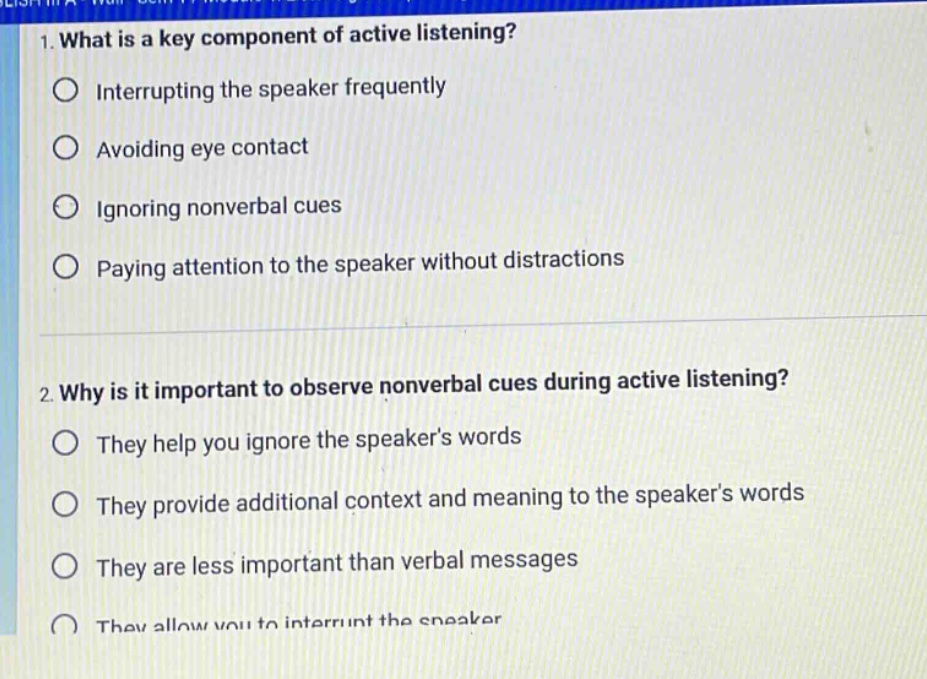
1. what is a key component of active listening?\ninterrupting the speaker frequently\navoiding eye contact\nignoring nonverbal cues\npaying attention to the speaker without distractions\n\n2. why is it important to observe nonverbal cues during active listening?\nthey help you ignore the speakers words\nthey provide additional context and meaning to the speakers words\nthey are less important than verbal messages\nthey allow you to interrupt the speaker
Answer
Brief Explanations:
- Active listening involves fully concentrating on the speaker. Interrupting, avoiding eye - contact, and ignoring non - verbal cues are not part of it. Paying attention without distractions is key.
- Non - verbal cues like body language, facial expressions add context to what the speaker is saying. They are not for ignoring words, are important, and not for interrupting.
Answer:
- Paying attention to the speaker without distractions
- They provide additional context and meaning to the speaker's words