7. what kind of change is this and why? a. chemical change - new type of particle after change b. physical…
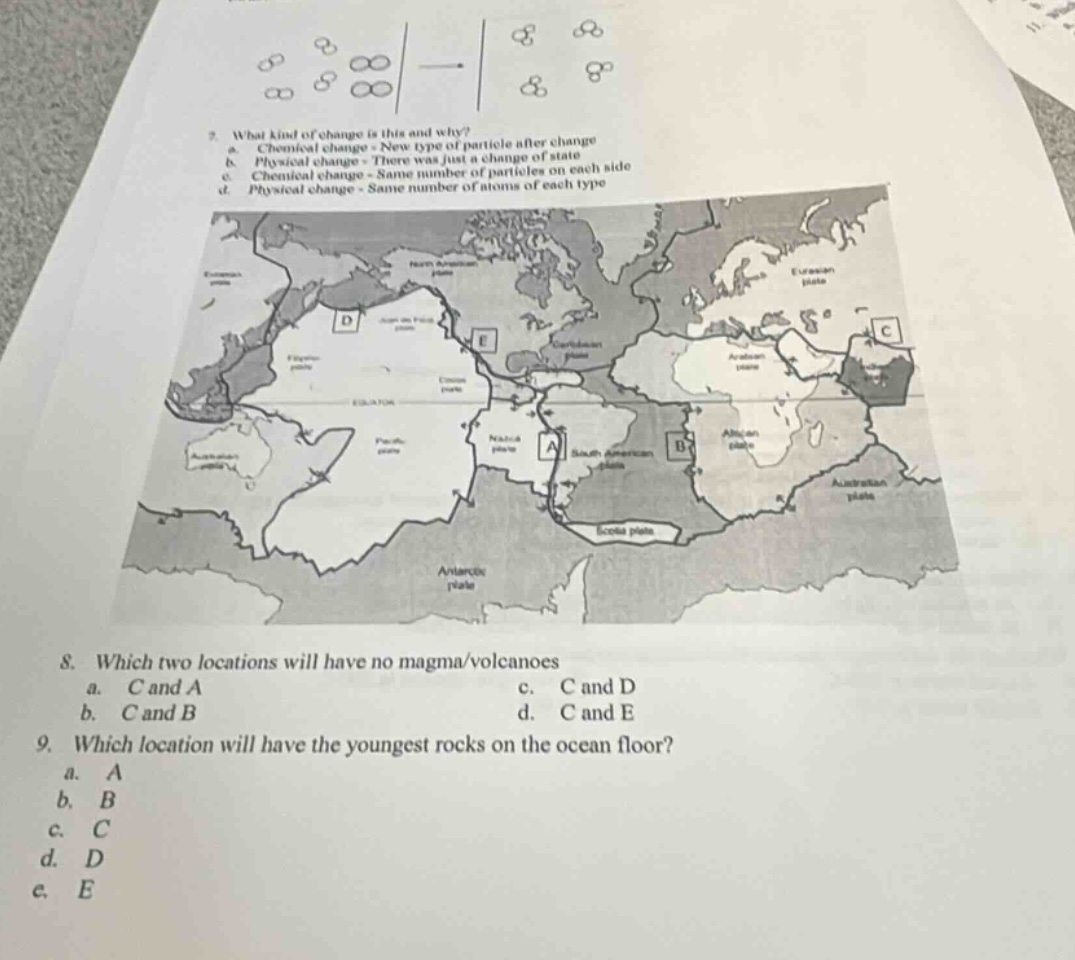
7. what kind of change is this and why? a. chemical change - new type of particle after change b. physical change - there was just a change of state c. chemical change - same number of particles on each side d. physical change - same number of atoms of each type 8. which two locations will have no magma/volcanoes a. c and a c. c and d b. c and b d. c and e 9. which location will have the youngest rocks on the ocean floor? a. a b. b c. c d. d e. e
Answer
Answer:
- d
- c
- a
Explanation:
Step1: Analyze question 7
In a physical - change, the number of atoms of each type remains the same. No new substances (new types of particles) are formed.
Step2: Analyze question 8
C and D are in the middle of tectonic plates where there is less volcanic activity compared to plate - boundaries.
Step3: Analyze question 9
A is likely a mid - ocean ridge. New oceanic crust is formed at mid - ocean ridges, so the rocks there are the youngest on the ocean floor.