in march 1983, in response to the baby doe case, the u.s. department of health and human services issued a…
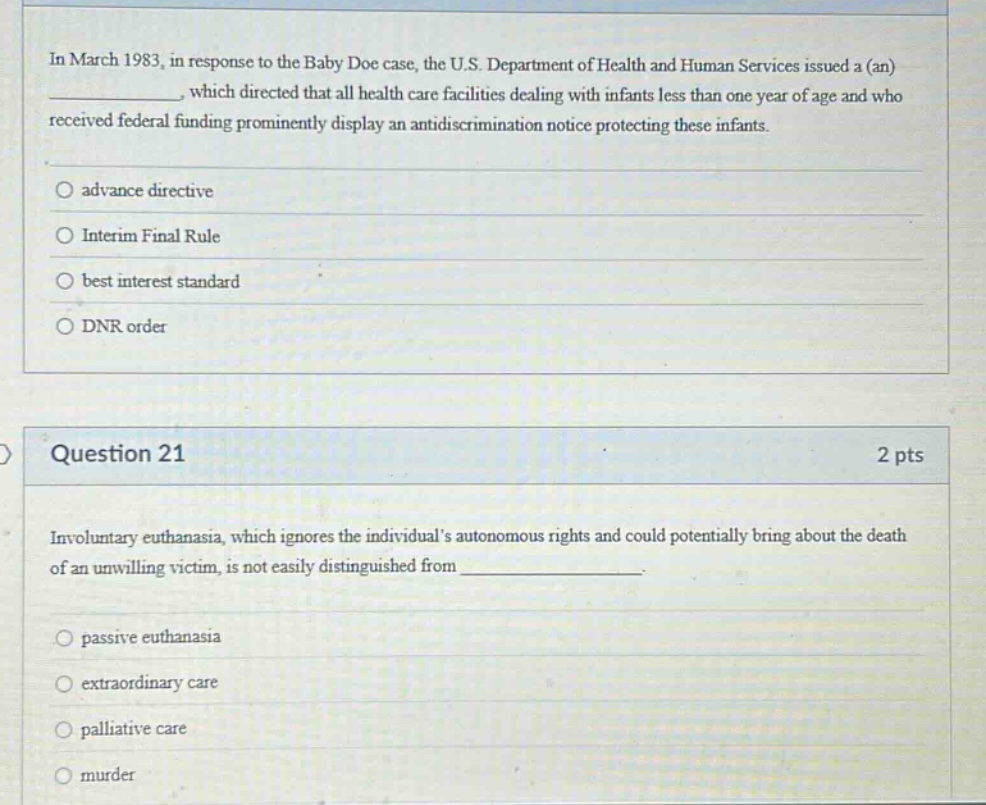
in march 1983, in response to the baby doe case, the u.s. department of health and human services issued a (an) ____________, which directed that all health care facilities dealing with infants less than one year of age and who received federal funding prominently display an antidiscrimination notice protecting these infants.\nadvance directive\ninterim final rule\nbest interest standard\ndnr order\n\nquestion 21\n2 pts\ninvoluntary euthanasia, which ignores the individuals autonomous rights and could potentially bring about the death of an unwilling victim, is not easily distinguished from ____________.\npassive euthanasia\nextraordinary care\npalliative care\nmurder
Answer
Brief Explanations:
- In response to the Baby Doe case in March 1983, the U.S. Department of Health and Human Services issued the Interim Final Rule which required certain health - care facilities to display an antidiscrimination notice.
- Involuntary euthanasia, which goes against an individual's will and can cause death, is similar to murder as both involve the non - consensual taking of life.
Answer:
Question 1: B. Interim Final Rule Question 2: D. murder