match the correct term to the correct definition. sedimentary rock minerals breaking along smooth, flat…
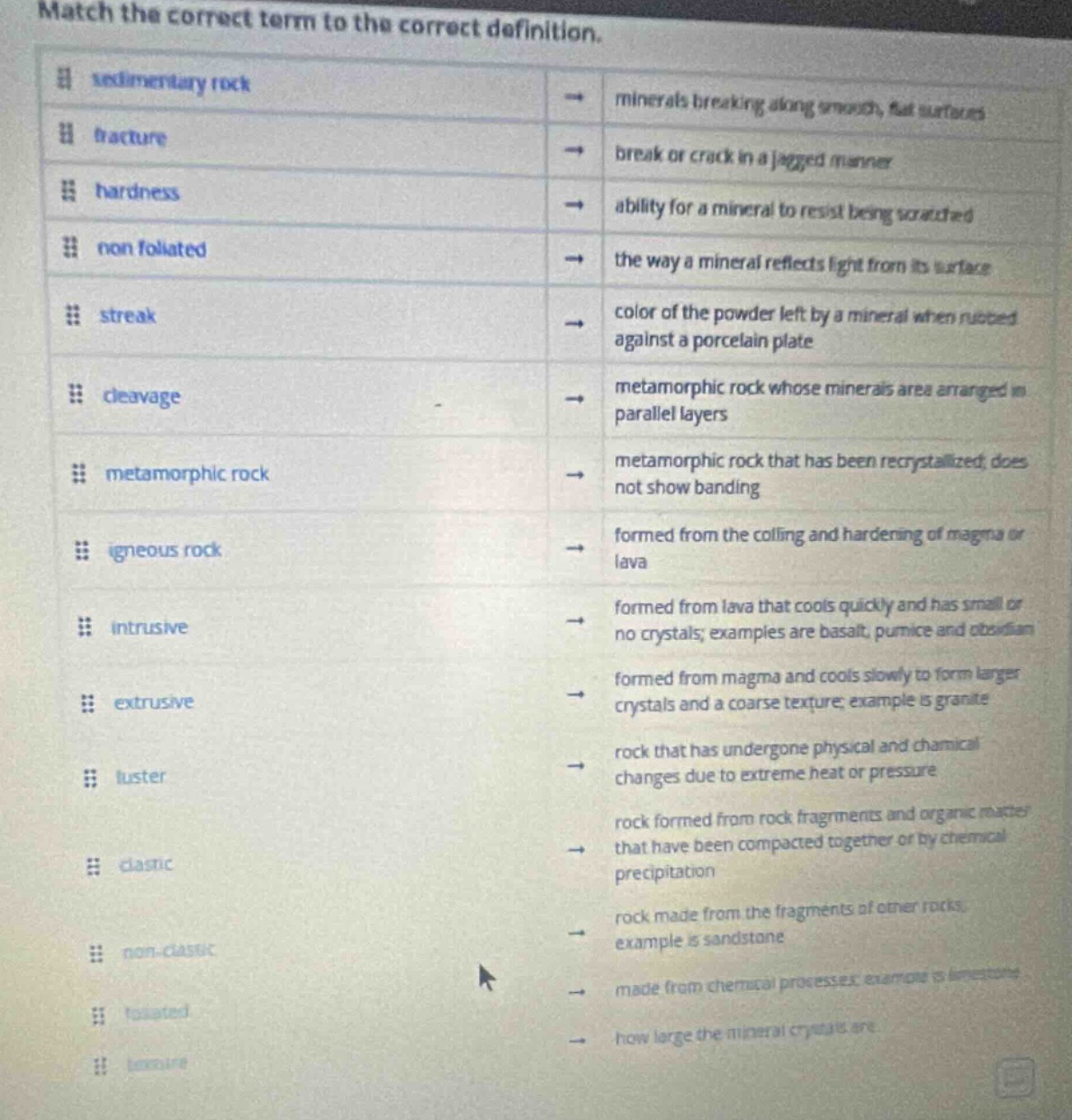
match the correct term to the correct definition. sedimentary rock minerals breaking along smooth, flat surfaces fracture break or crack in a jagged manner hardness ability for a mineral to resist being scratched non foliated the way a mineral reflects light from its surface streak color of the powder left by a mineral when rubbed against a porcelain plate cleavage metamorphic rock whose minerals are arranged in parallel layers metamorphic rock metamorphic rock that has been recrystallized; does not show banding igneous rock formed from the cooling and hardening of magma or lava intrusive formed from lava that cools quickly and has small or no crystals; examples are basalt, pumice and obsidian extrusive formed from magma and cools slowly to form larger crystals and a coarse texture; example is granite luster rock that has undergone physical and chemical changes due to extreme heat or pressure clastic rock formed from rock fragments and organic matter that have been compacted together or by chemical precipitation non - clastic rock made from the fragments of other rocks; example is sandstone made from chemical processes; example is limestone foliated how large the mineral crystals are texture
Answer
Brief Explanations:
- Sedimentary rock: Rock formed from rock fragments and organic matter that have been compacted together or by chemical precipitation. Rock made from the fragments of other rocks, example is sandstone.
- Fracture: Break or crack in a jagged manner.
- Hardness: Ability for a mineral to resist being scratched.
- Non - foliated: Metamorphic rock that has been recrystallized; does not show banding.
- Streak: Color of the powder left by a mineral when rubbed against a porcelain plate.
- Cleavage: Minerals breaking along smooth, flat surfaces.
- Metamorphic rock: Rock that has undergone physical and chemical changes due to extreme heat or pressure. Metamorphic rock whose minerals are arranged in parallel layers (foliated is a type, but not all metamorphic rocks are foliated).
- Igneous rock: Formed from the cooling and hardening of magma or lava.
- Intrusive: Formed from magma and cools slowly to form larger crystals and a coarse texture, example is granite.
- Extrusive: Formed from lava that cools quickly and has small or no crystals; examples are basalt, pumice and obsidian.
- Luster: The way a mineral reflects light from its surface.
- Clastic: Rock made from the fragments of other rocks.
- Non - clastic: Made from chemical processes, example is limestone.
- Foliated: Metamorphic rock whose minerals are arranged in parallel layers.
- Texture: How large the mineral crystals are.
Answer:
- Sedimentary rock: Rock formed from rock fragments and organic matter that have been compacted together or by chemical precipitation; rock made from the fragments of other rocks, example is sandstone.
- Fracture: Break or crack in a jagged manner.
- Hardness: Ability for a mineral to resist being scratched.
- Non - foliated: Metamorphic rock that has been recrystallized; does not show banding.
- Streak: Color of the powder left by a mineral when rubbed against a porcelain plate.
- Cleavage: Minerals breaking along smooth, flat surfaces.
- Metamorphic rock: Rock that has undergone physical and chemical changes due to extreme heat or pressure; metamorphic rock whose minerals are arranged in parallel layers (foliated is a type, but not all metamorphic rocks are foliated).
- Igneous rock: Formed from the cooling and hardening of magma or lava.
- Intrusive: Formed from magma and cools slowly to form larger crystals and a coarse texture, example is granite.
- Extrusive: Formed from lava that cools quickly and has small or no crystals; examples are basalt, pumice and obsidian.
- Luster: The way a mineral reflects light from its surface.
- Clastic: Rock made from the fragments of other rocks.
- Non - clastic: Made from chemical processes, example is limestone.
- Foliated: Metamorphic rock whose minerals are arranged in parallel layers.
- Texture: How large the mineral crystals are.