medical ethics\nname: leila a.\ndate:\ntwo dominant theories in ethics:\ndeontology\ndecisions based on…
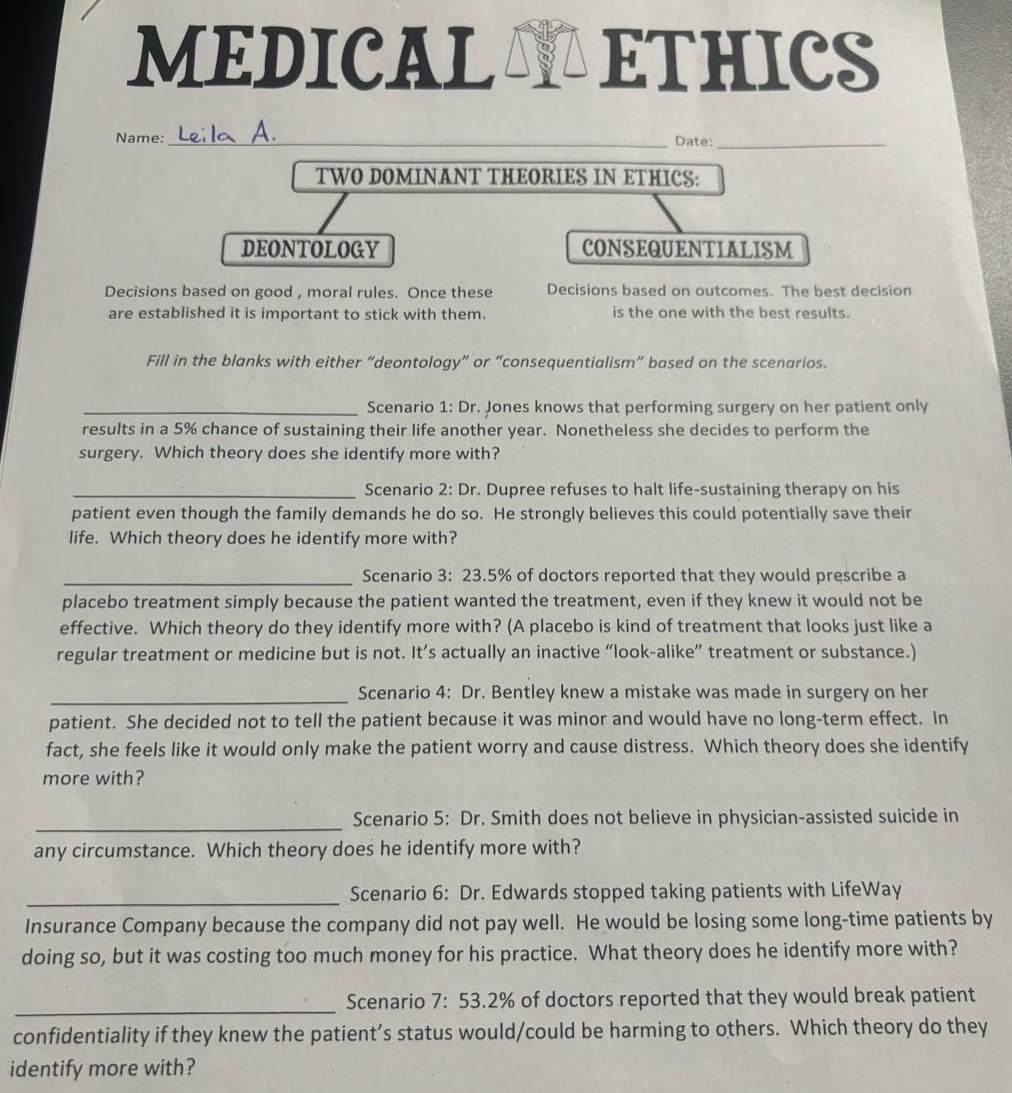
medical ethics\nname: leila a.\ndate:\ntwo dominant theories in ethics:\ndeontology\ndecisions based on good, moral rules. once these are established it is important to stick with them.\nconsequentialism\ndecisions based on outcomes. the best decision is the one with the best results.\nfill in the blanks with either “deontology” or “consequentialism” based on the scenarios.\nscenario 1: dr. jones knows that performing surgery on her patient only results in a 5% chance of sustaining their life another year. nonetheless she decides to perform the surgery. which theory does she identify more with?\nscenario 2: dr. dupree refuses to halt life - sustaining therapy on his patient even though the family demands he do so. he strongly believes this could potentially save their life. which theory does he identify more with?\nscenario 3: 23.5% of doctors reported that they would prescribe a placebo treatment simply because the patient wanted the treatment, even if they knew it would not be effective. which theory do they identify more with? (a placebo is kind of treatment that looks just like a regular treatment or medicine but is not. it’s actually an inactive “look - alike” treatment or substance.)\nscenario 4: dr. bentley knew a mistake was made in surgery on her patient. she decided not to tell the patient because it was minor and would have no long - term effect. in fact, she feels like it would only make the patient worry and cause distress. which theory does she identify more with?\nscenario 5: dr. smith does not believe in physician - assisted suicide in any circumstance. which theory does he identify more with?\nscenario 6: dr. edwards stopped taking patients with lifeway insurance company because the company did not pay well. he would be losing some long - time patients by doing so, but it was costing too much money for his practice. what theory does he identify more with?\nscenario 7: 53.2% of doctors reported that they would break patient confidentiality if they knew the patient’s status would/could be harming to others. which theory do they identify more with?
Answer
Brief Explanations:
- Scenario 1: Dr. Jones makes a decision based on the potential outcome of saving the patient's life, so it's consequentialism.
- Scenario 2: Dr. Dupree refuses to stop life - sustaining therapy believing it could save the patient, focusing on the outcome, so it's consequentialism.
- Scenario 3: Doctors prescribe a placebo because the patient wants it, considering the outcome of patient satisfaction, so it's consequentialism.
- Scenario 4: Dr. Bentley doesn't tell the patient about the mistake to avoid causing distress, thinking about the outcome, so it's consequentialism.
- Scenario 5: Dr. Smith has a moral rule against physician - assisted suicide in any circumstance, so it's deontology.
- Scenario 6: Dr. Edwards stops taking patients from a certain insurance company based on the financial outcome for his practice, so it's consequentialism.
- Scenario 7: Doctors break patient confidentiality considering the outcome of protecting others, so it's consequentialism.
Answer:
Scenario 1: Consequentialism Scenario 2: Consequentialism Scenario 3: Consequentialism Scenario 4: Consequentialism Scenario 5: Deontology Scenario 6: Consequentialism Scenario 7: Consequentialism