4 multiple choice 2 points\nwhich of the following is an example of a negative right?\nthe right to a…
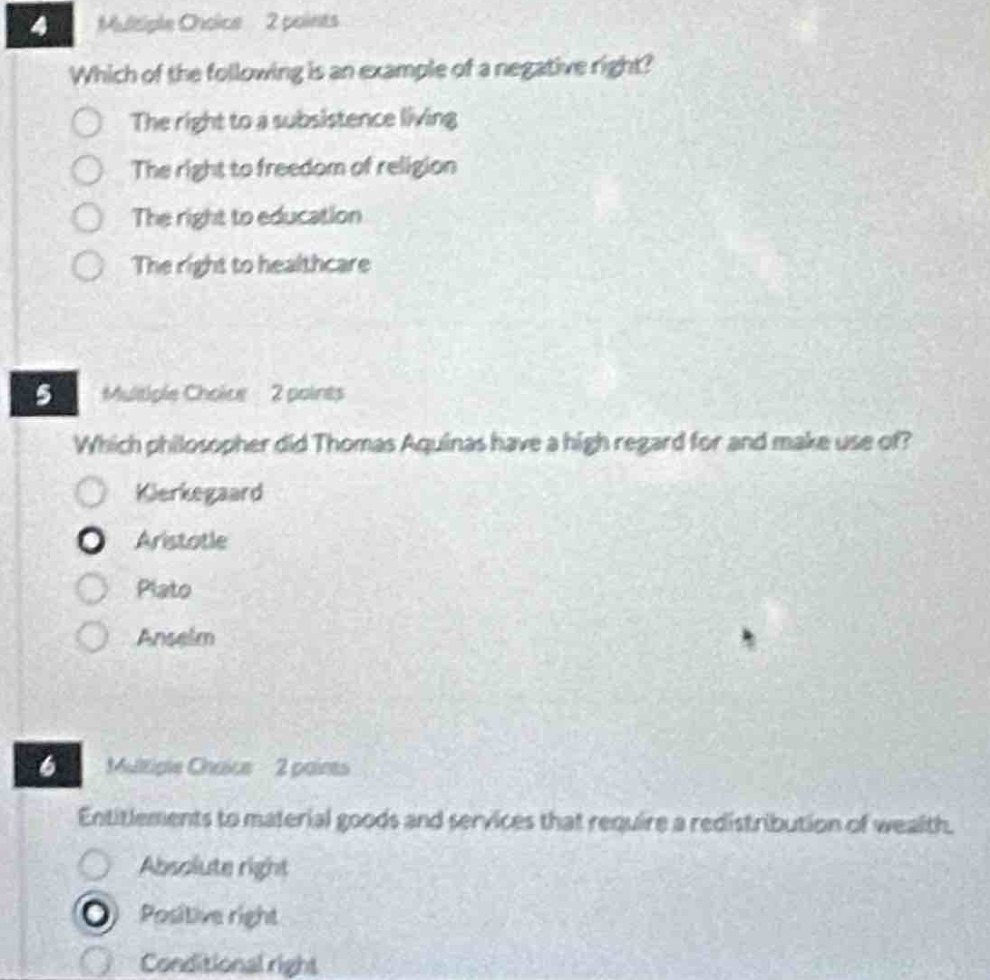
4 multiple choice 2 points\nwhich of the following is an example of a negative right?\nthe right to a subsistence living\nthe right to freedom of religion\nthe right to education\nthe right to healthcare\n5 multiple choice 2 points\nwhich philosopher did thomas aquinas have a high regard for and make use of?\nkierkegaard\naristotle\nplato\nanselm\n6 multiple choice 2 points\nentitlements to material goods and services that require a redistribution of wealth.\nabsolute right\npositive right\nconditional right
Answer
Brief Explanations:
- For question 4: Negative rights are rights that require non - interference. The right to freedom of religion is a negative right as it mainly requires others not to interfere with one's religious choices. The other options (subsistence living, education, healthcare) often require positive actions or resource distribution.
- For question 5: Thomas Aquinas integrated Aristotelian philosophy into Christian theology, highly regarding and making extensive use of Aristotle's ideas.
- For question 6: Positive rights are entitlements to material goods and services that often require a redistribution of wealth, such as welfare or healthcare provisions.
Answer:
- The right to freedom of religion
- Aristotle
- Positive right