6. what is the name of the asphalt deposits in los angeles, california?\n7. name two organisms that would be…
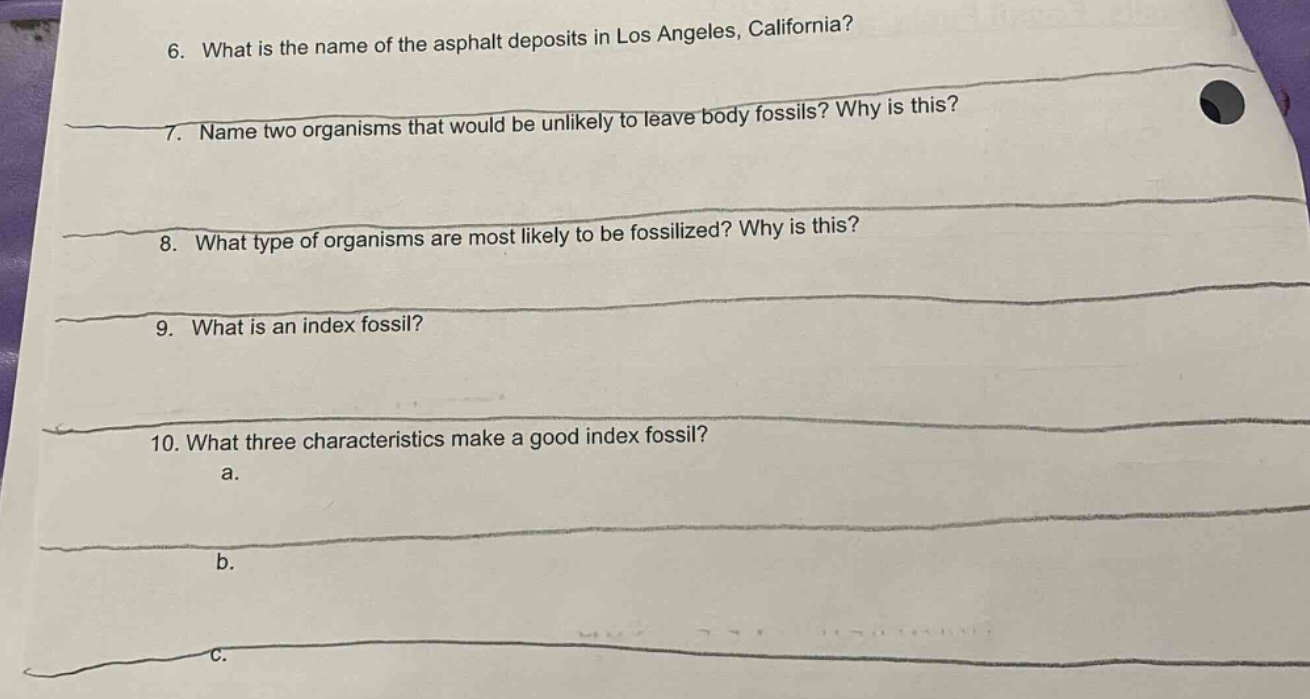
6. what is the name of the asphalt deposits in los angeles, california?\n7. name two organisms that would be unlikely to leave body fossils? why is this?\n8. what type of organisms are most likely to be fossilized? why is this?\n9. what is an index fossil?\n10. what three characteristics make a good index fossil?\na.\nb.\nc.
Answer
Brief Explanations:
- The La Brea Tar Pits are well - known asphalt deposits in Los Angeles.
- Soft - bodied organisms like jellyfish and worms are unlikely to leave body fossils because they lack hard parts that can withstand decomposition and fossilization processes.
- Organisms with hard parts such as bones, shells, or exoskeletons are most likely to be fossilized. Hard parts are more resistant to decay and can be preserved over long periods.
- An index fossil is a fossil that is used to define and identify geologic periods. It is widespread geographically but limited in geologic time.
- a. Widespread distribution: Found in many locations around the world. b. Abundant: Present in large numbers in the rock record. c. Limited time range: Existed for a relatively short period of geologic time.
Answer:
- La Brea Tar Pits
- Jellyfish and worms; they lack hard parts.
- Organisms with hard parts; hard parts are decay - resistant.
- A fossil used to define and identify geologic periods.
- a. Widespread distribution b. Abundant c. Limited time range