name: classroom set period: \n1. why do the animals choose to revolt? explain their complaints (use movie…
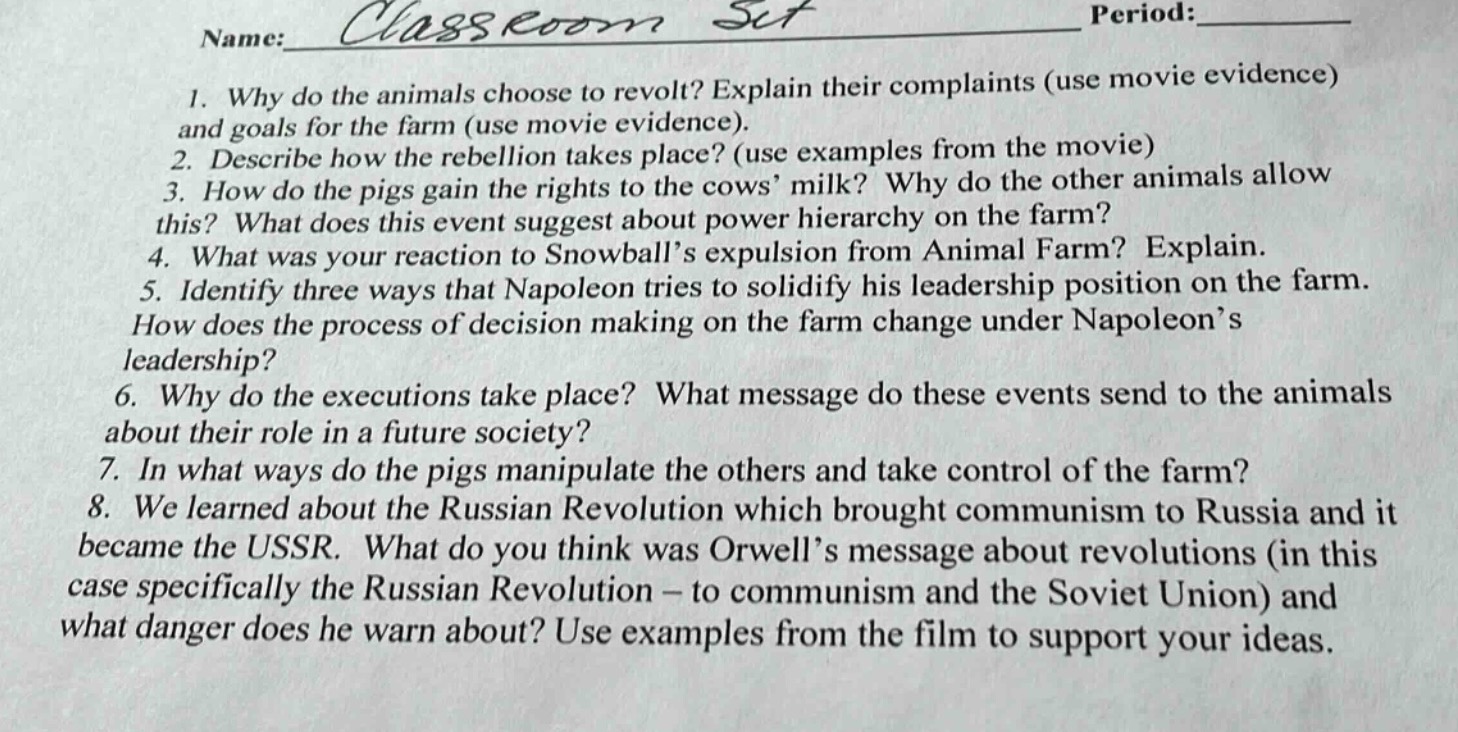
name: classroom set period: \n1. why do the animals choose to revolt? explain their complaints (use movie evidence) and goals for the farm (use movie evidence).\n2. describe how the rebellion takes place? (use examples from the movie)\n3. how do the pigs gain the rights to the cows’ milk? why do the other animals allow this? what does this event suggest about power hierarchy on the farm?\n4. what was your reaction to snowball’s expulsion from animal farm? explain.\n5. identify three ways that napoleon tries to solidify his leadership position on the farm. how does the process of decision making on the farm change under napoleon’s leadership?\n6. why do the executions take place? what message do these events send to the animals about their role in a future society?\n7. in what ways do the pigs manipulate the others and take control of the farm?\n8. we learned about the russian revolution which brought communism to russia and it became the ussr. what do you think was orwell’s message about revolutions (in this case specifically the russian revolution – to communism and the soviet union) and what danger does he warn about? use examples from the film to support your ideas.
Answer
Brief Explanations:
- Animals revolt due to harsh treatment by humans. Their complaints include long - working hours, low food rations, and lack of freedom. Their goal is a farm where animals are equal and self - governing, as seen when Old Major rallies them with the idea of a better life.
- The rebellion starts when Mr. Jones forgets to feed the animals. The animals attack the humans and drive them off the farm. For example, the cows break into the store - shed for food and the horses kick at the humans.
- The pigs gain the rights to the cows' milk by using propaganda and manipulation. They convince the other animals that the milk is needed for the pigs' brainwork to run the farm. The other animals allow this because they are naive and trust the pigs initially. This event shows the beginning of a power hierarchy where the pigs start to assert dominance.
- The expulsion of Snowball is a shock. It shows the rise of Napoleon's autocratic rule. Snowball was a visionary for the farm, and his removal indicates the shift from a democratic - like start to a dictatorship.
- Napoleon solidifies his leadership by using guard dogs to intimidate others, changing the commandments to suit his needs, and spreading false propaganda. Decision - making changes from a collective process to Napoleon making unilateral decisions.
- Executions take place to eliminate opposition and instill fear. They send a message that the animals have no real power and must blindly follow Napoleon's rule in the future society.
- Pigs manipulate others by changing the commandments, using Squealer to spread false information, and creating a class - like system where they have more privileges.
- Orwell warns that revolutions can be hijacked by power - hungry individuals. In the film, the animals' revolution starts with ideals of equality but ends with the pigs becoming as oppressive as the humans. For example, the pigs start living in the farmhouse and trading with humans, just like the old regime.
Answer:
- Animals revolt due to harsh treatment by humans. Their complaints include long - working hours, low food rations, and lack of freedom. Their goal is a farm where animals are equal and self - governing.
- The rebellion starts when Mr. Jones forgets to feed the animals. The animals attack the humans and drive them off the farm.
- The pigs gain the rights to the cows' milk by using propaganda and manipulation. The other animals allow this because they are naive and trust the pigs initially. It shows the beginning of a power hierarchy.
- The expulsion of Snowball is a shock and shows the rise of Napoleon's autocratic rule.
- Napoleon solidifies his leadership by using guard dogs, changing commandments, and spreading false propaganda. Decision - making changes from collective to unilateral.
- Executions take place to eliminate opposition and instill fear. They send a message of no real power for the animals in the future society.
- Pigs manipulate others by changing commandments, using Squealer, and creating a class - like system.
- Orwell warns that revolutions can be hijacked by power - hungry individuals. Examples include pigs living in the farmhouse and trading with humans.