1) name two recent environmental disasters in the world that fueling the climate justice movement? why are…
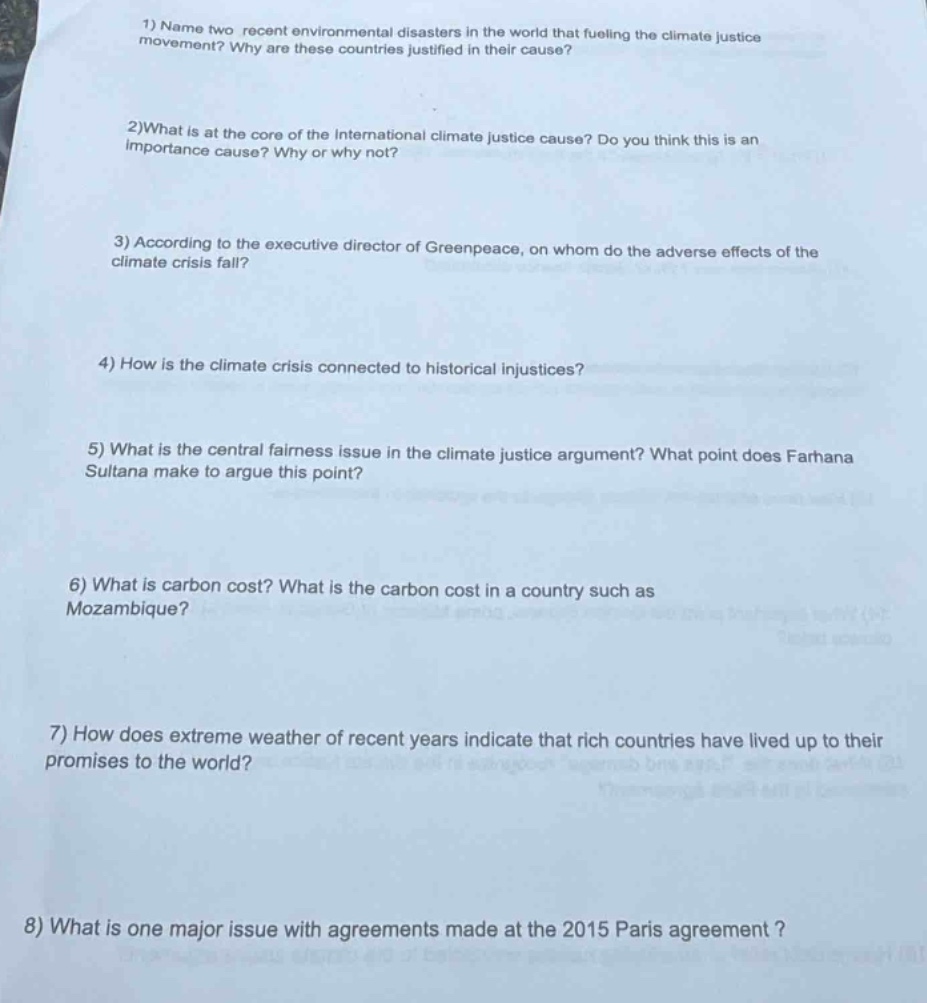
1) name two recent environmental disasters in the world that fueling the climate justice movement? why are these countries justified in their cause?\n2)what is at the core of the international climate justice cause? do you think this is an importance cause? why or why not?\n3) according to the executive director of greenpeace, on whom do the adverse effects of the climate crisis fall?\n4) how is the climate crisis connected to historical injustices?\n5) what is the central fairness issue in the climate justice argument? what point does farhana sultana make to argue this point?\n6) what is carbon cost? what is the carbon cost in a country such as mozambique?\n7) how does extreme weather of recent years indicate that rich countries have lived up to their promises to the world?\n8) what is one major issue with agreements made at the 2015 paris agreement?
Answer
Brief Explanations:
- Recent environmental - disasters: For example, the 2021 floods in Germany and Belgium, and the 2020 wildfires in California. These countries are justified as they face the brunt of climate - change impacts caused by global greenhouse gas emissions, and seek fair contribution from major emitters in mitigation and adaptation.
- Core of international climate justice: At its core is the fair distribution of the burden of addressing climate change, including responsibilities for emissions reduction, adaptation financing, and technology transfer. It is important as climate change disproportionately affects vulnerable communities and developing countries, and justice is needed to ensure a sustainable and equitable global response.
- Adverse effects of climate crisis: According to Greenpeace's executive director, the adverse effects of the climate crisis fall disproportionately on the world's poor, indigenous communities, and vulnerable populations who have contributed the least to greenhouse - gas emissions but are most affected by climate - related disasters.
- Connection to historical injustices: Historical injustices are connected as developed countries have been the major emitters of greenhouse gases over the long term due to industrialization, while developing countries are now facing the consequences. Also, past colonial and extractive practices in developing countries have left them more vulnerable to climate change.
- Central fairness issue: The central fairness issue is the unequal distribution of the costs and benefits of climate change. Farhana Sultana argues that developed countries, which have historically contributed most to emissions, should take on a greater share of the burden in mitigation, adaptation, and providing financial and technological support to developing countries.
- Carbon cost: Carbon cost refers to the economic and social costs associated with carbon emissions, including environmental damage, health impacts, and costs of adaptation. In Mozambique, the carbon cost is high as the country is vulnerable to climate - related disasters such as cyclones and floods, which damage infrastructure, agriculture, and human lives, and it has limited resources to adapt.
- Rich countries and promises: Recent extreme weather events show that rich countries have not lived up to their promises as they have not reduced emissions enough to limit the impacts of climate change. Despite pledges to cut emissions and provide climate finance, the frequency and severity of extreme weather suggest a lack of sufficient action.
- Issue with Paris Agreement: One major issue is the lack of sufficient ambition and enforceability. The voluntary nature of the emissions - reduction targets means that some countries may not meet their commitments, and there are no strict penalties for non - compliance.
Answer:
- The 2021 floods in Germany and Belgium; the 2020 wildfires in California. Justified as they face impacts from global emissions and seek fair contribution from major emitters.
- Core is fair distribution of climate - change burden. Important as it affects vulnerable communities disproportionately.
- Disproportionately on the world's poor, indigenous communities, and vulnerable populations.
- Developed countries are major historical emitters and past colonial practices left developing countries vulnerable.
- Unequal distribution of climate - change costs and benefits. Developed countries should take more responsibility.
- Economic and social costs of carbon emissions. High in Mozambique due to vulnerability to climate - related disasters.
- Extreme weather shows they have not reduced emissions enough and not met climate - finance pledges.
- Lack of sufficient ambition and enforceability with voluntary targets and no strict non - compliance penalties.