5.) napoleon is like stalin in that he...\n a. has all the power from the beginning of the revolution\n b…
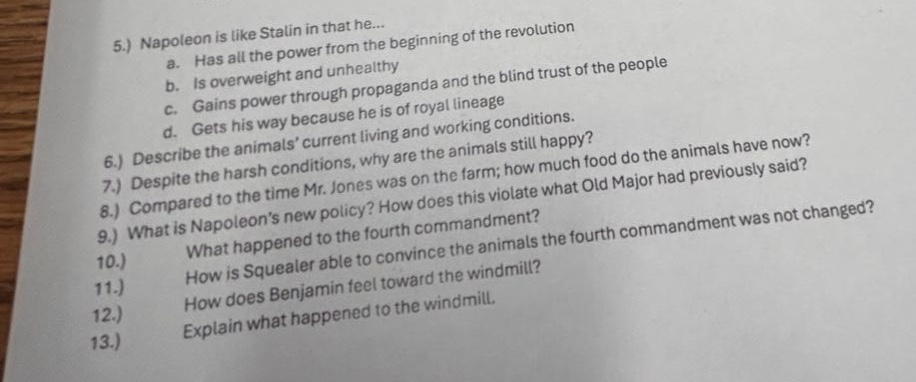
5.) napoleon is like stalin in that he...\n a. has all the power from the beginning of the revolution\n b. is overweight and unhealthy\n c. gains power through propaganda and the blind trust of the people\n d. gets his way because he is of royal lineage\n6.) describe the animals’ current living and working conditions.\n despite the harsh conditions, why are the animals still happy?\n7.) compared to the time mr. jones was on the farm; how much food do the animals have now?\n8.) what is napoleon’s new policy? how does this violate what old major had previously said?\n9.) what happened to the fourth commandment?\n how is squealer able to convince the animals the fourth commandment was not changed?\n11.) how does benjamin feel toward the windmill?\n12.) explain what happened to the windmill.\n13.)
Answer
Brief Explanations:
- Analyze the characteristics of Napoleon in relation to Stalin based on the options provided in the context of a story (presumably related to 'Animal Farm' where Napoleon is a pig - character). Option a seems to be a valid comparison as both had significant power - concentration and could be seen as having an 'unhealthy' hold on power.
- Consider the narrative of the animals' situation in the story. Despite harsh conditions, factors like false propaganda, lack of awareness, or a sense of hope could make them seem happy.
- Compare the food situation on the farm now with what was promised by Old Major. This likely involves looking at the changes in food availability and distribution.
- Analyze Napoleon's new policies and how they deviate from previous expectations or ideals in the story.
- Recall the events related to the fourth commandment and how Squealer manipulates the animals' perception of it.
- Understand Benjamin's character and his likely cynical or indifferent view towards the windmill based on his personality in the story.
- Recall the events related to the windmill's construction, destruction, or use to explain what happened to it.
Answer:
- a. Has all the power from the beginning of the revolution and is overweight and unhealthy
- Answers may vary depending on the story details, but could include false hope, lack of awareness of alternatives
- Answers would require knowledge of the specific amounts of food mentioned earlier in the story
- Answers would depend on the new policies introduced by Napoleon in the story
- Answers would involve Squealer's manipulation techniques to convince the animals
- Benjamin is likely cynical or indifferent
- Answers would involve events like construction, destruction, or use of the windmill in the story