where’s the oil?\nten states accounted for roughly 94% of all onshore u.s. oil reserves as of the end of…
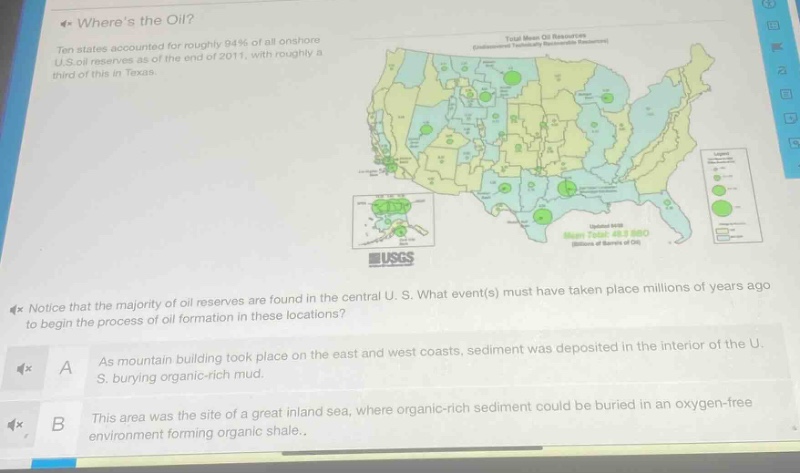
where’s the oil?\nten states accounted for roughly 94% of all onshore u.s. oil reserves as of the end of 2011, with roughly a third of this in texas.\nnotice that the majority of oil reserves are found in the central u.s. what event(s) must have taken place millions of years ago to begin the process of oil formation in these locations?\na as mountain building took place on the east and west coasts, sediment was deposited in the interior of the u.s. burying organic - rich mud.\nb this area was the site of a great inland sea, where organic - rich sediment could be buried in an oxygen - free environment forming organic shale.
Answer
Brief Explanations:
Oil is formed from the remains of organic - rich materials buried in an oxygen - free environment over long periods. A great inland sea would provide such an environment for organic - rich sediment to be buried and form organic shale which can lead to oil formation. Mountain building causing sediment deposition in the interior may not directly create the necessary oxygen - free conditions for oil formation as effectively as an inland sea.
Answer:
B. This area was the site of a great inland sea, where organic - rich sediment could be buried in an oxygen - free environment forming organic shale.