the oldest fossils look at the image of layers of rock below earth’s surface, and think about how this…
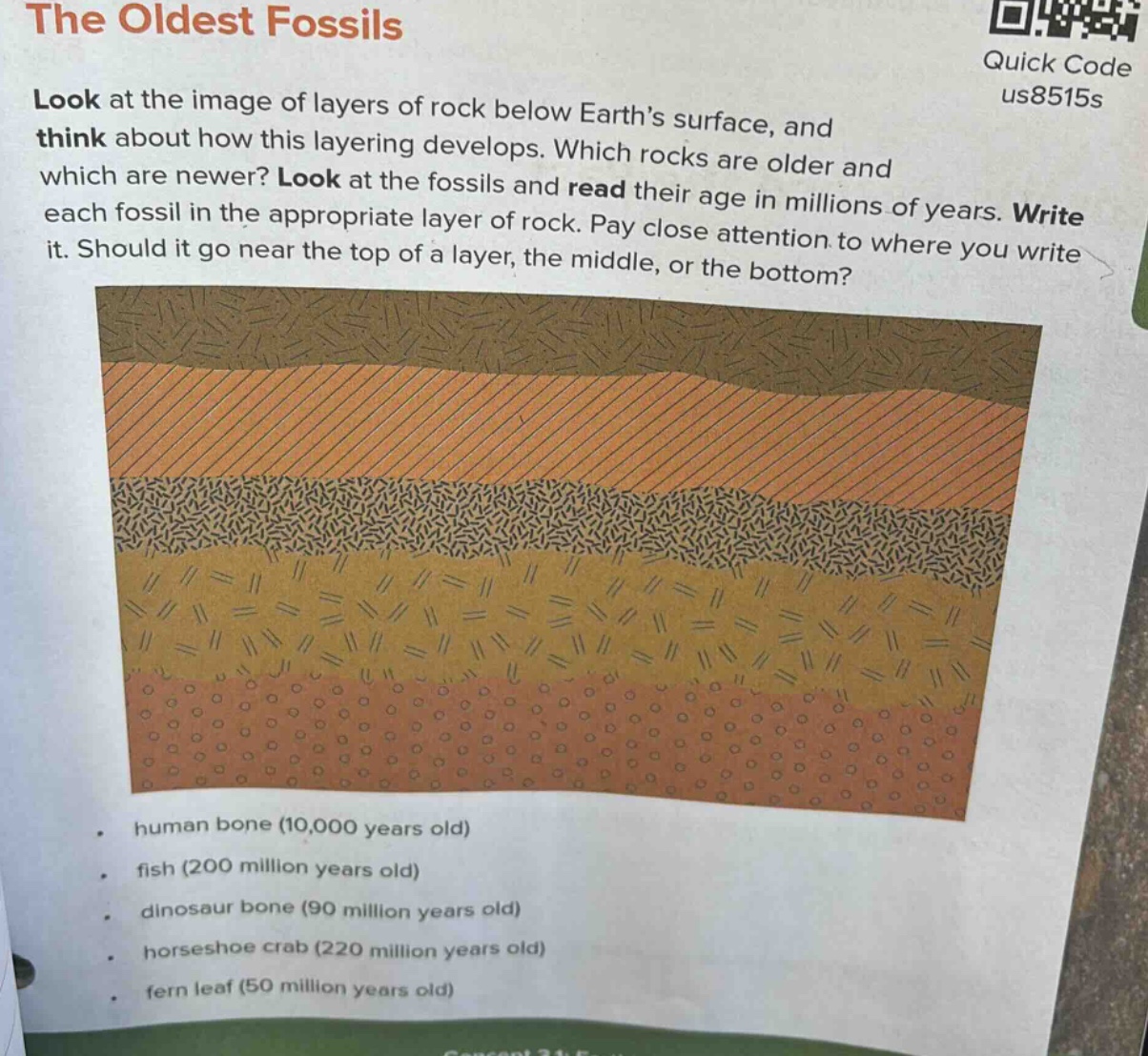
the oldest fossils look at the image of layers of rock below earth’s surface, and think about how this layering develops. which rocks are older and which are newer? look at the fossils and read their age in millions of years. write each fossil in the appropriate layer of rock. pay close attention to where you write it. should it go near the top of a layer, the middle, or the bottom? human bone (10,000 years old) fish (200 million years old) dinosaur bone (90 million years old) horseshoe crab (220 million years old) fern leaf (50 million years old)
Answer
Brief Explanations:
In geology (a sub - field of Natural Science), older fossils are typically found in lower rock layers and younger fossils in upper layers. The horseshoe crab (220 million years old) is the oldest among the given fossils and should be placed in the bottom - most layer. The fish (200 million years old) is next oldest and should be placed above the horseshoe crab layer. The dinosaur bone (90 million years old) should be placed above the fish layer. The fern leaf (50 million years old) should be placed above the dinosaur bone layer. The human bone (10,000 years old) is the youngest and should be placed near the top of the rock layers.
Answer:
Horseshoe crab in bottom - most layer, fish above it, dinosaur bone above fish, fern leaf above dinosaur bone, human bone near top.