open - ended questions\n1. how does biology help athletes improve their performance?\n2. in what ways does…
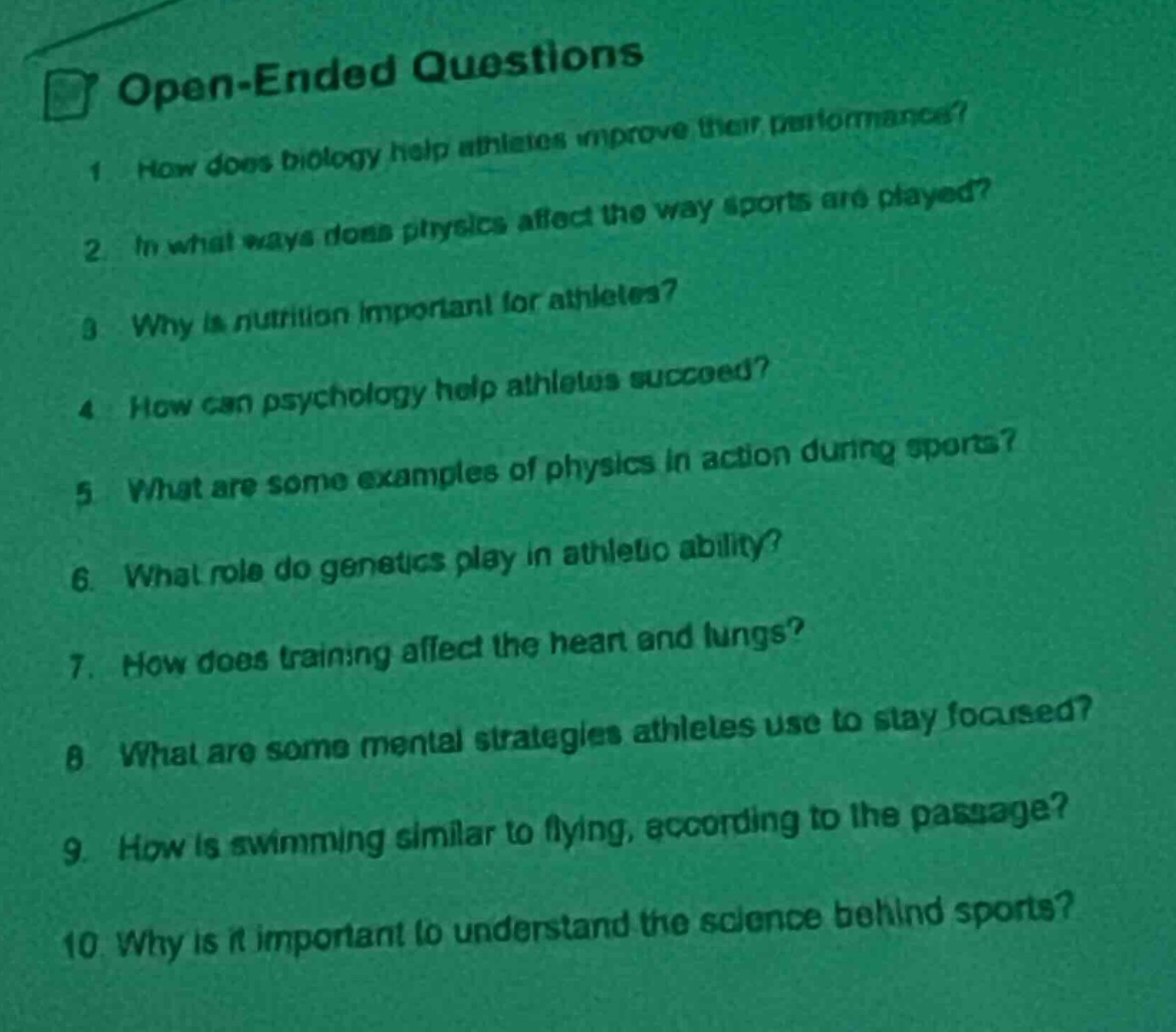
open - ended questions\n1. how does biology help athletes improve their performance?\n2. in what ways does physics affect the way sports are played?\n3. why is nutrition important for athletes?\n4. how can psychology help athletes succeed?\n5. what are some examples of physics in action during sports?\n6. what role do genetics play in athlete ability?\n7. how does training affect the heart and lungs?\n8. what are some mental strategies athletes use to stay focused?\n9. how is swimming similar to flying, according to the passage?\n10. why is it important to understand the science behind sports?
Answer
Brief Explanations:
- Biology helps athletes by understanding muscle - tissue repair, energy metabolism, and genetic factors related to performance.
- Physics affects sports through concepts like motion, force, and aerodynamics. For example, in a basketball shot, the angle and force determine the trajectory.
- Nutrition is important for athletes as it provides energy for training and competition, aids in recovery, and supports overall health.
- Psychology helps athletes succeed by improving mental focus, motivation, and stress - management.
- Physics in action during sports includes the bounce of a tennis ball (elasticity), the flight of a javelin (projectile motion).
- Genetics play a role in athletic ability by influencing factors such as muscle fiber type, aerobic capacity, and height.
- Training strengthens the heart muscle, increasing its efficiency in pumping blood, and improves lung capacity, allowing for more oxygen intake.
- Athletes use mental strategies like visualization, positive self - talk, and goal - setting to stay focused.
- Swimming is similar to flying in that both involve moving through a fluid medium (water for swimming, air for flying) and require generating lift and thrust.
- Understanding the science behind sports helps in optimizing training, reducing the risk of injury, and enhancing performance.
Answer:
- Biology helps with muscle repair, energy metabolism, and genetic factors for performance.
- Physics affects through motion, force, and aerodynamics concepts.
- Nutrition provides energy, aids recovery, and supports health.
- Psychology improves mental focus, motivation, and stress - management.
- Examples include tennis ball bounce and javelin flight.
- Genetics influence muscle fiber type, aerobic capacity, etc.
- Training strengthens the heart and improves lung capacity.
- Mental strategies are visualization, positive self - talk, etc.
- Both involve moving through a fluid medium and generating lift/thrust.
- Helps in optimizing training, reducing injury risk, and enhancing performance.