overdose death rates involving opioids, by type, united states, 2000 - 2017\nsource: cdc/nchs, national…
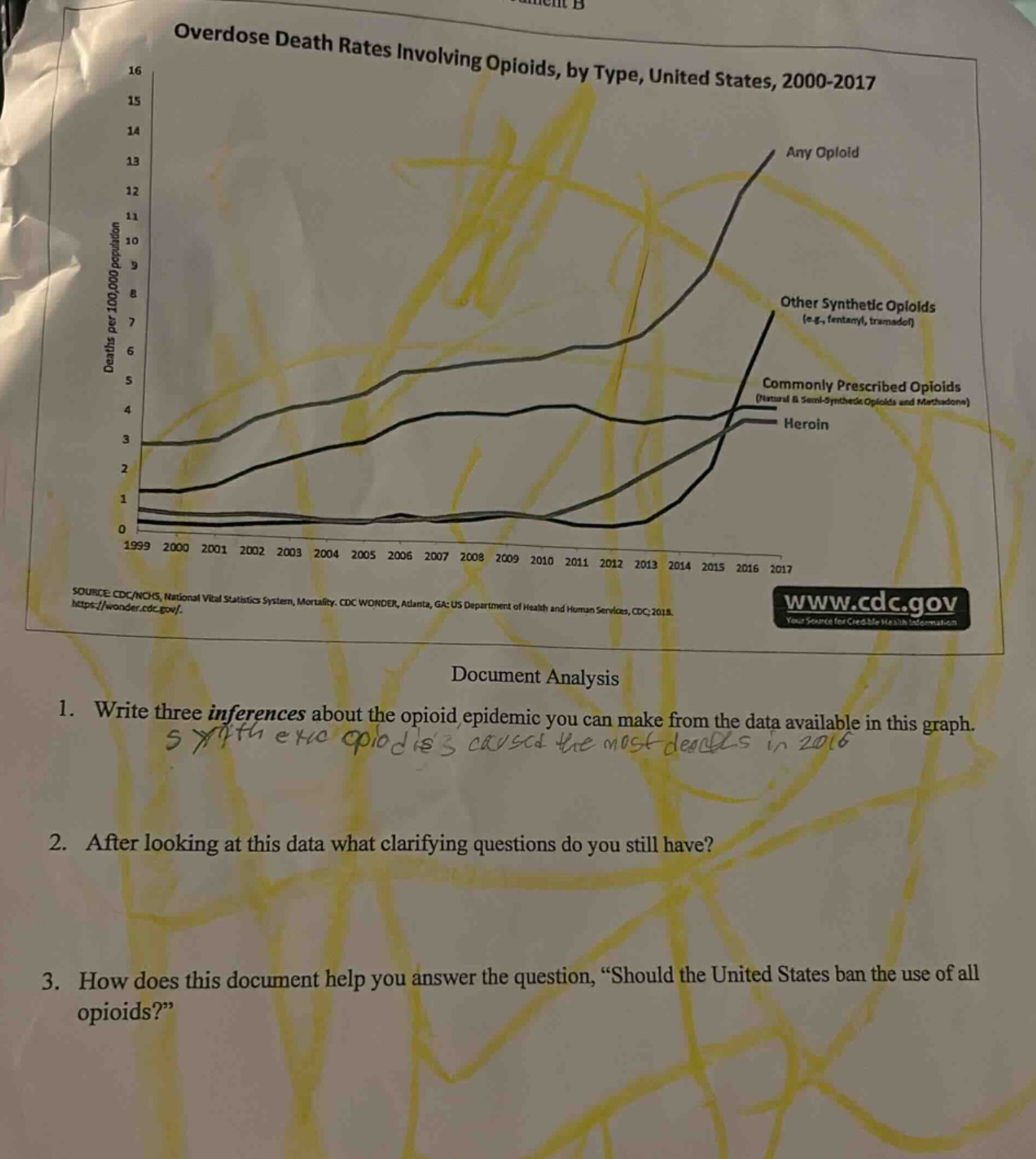
overdose death rates involving opioids, by type, united states, 2000 - 2017\nsource: cdc/nchs, national vital statistics system, mortality. cdc wonder, atlanta, ga; us department of health and human services, cdc 2018. https://wonder.cdc.gov/.\nwww.cdc.gov\ndocument analysis\n1. write three inferences about the opioid epidemic you can make from the data available in this graph.\n2. after looking at this data what clarifying questions do you still have?\n3. how does this document help you answer the question, “should the united states ban the use of all opioids?”
Answer
Answer:
- Inference 1: The overall overdose - death rate involving any opioid has been steadily increasing from 2000 - 2017.
- Inference 2: Other synthetic opioids (e.g., fentanyl, tramadol) had a sharp increase in overdose - death rates starting around 2013.
- Inference 3: Heroin's overdose - death rate has been relatively stable compared to other types in the early years but started to increase more significantly later.
- Are there differences in overdose - death rates by region within the United States?
- What are the specific reasons for the sudden increase in other synthetic opioids' death rates?
- How accurate are the data collection methods for determining opioid - related deaths?
- The document shows the rising death tolls associated with different types of opioids. It provides evidence of the severity of the opioid epidemic. However, it doesn't consider the medical benefits of opioids for pain management. So, while it shows the negative consequences, it doesn't fully answer the question of a complete ban as it lacks information on the potential harm of eliminating all opioid use in a medical context.
Brief Explanations:
- Analyzed trends in the graph for inferences.
- Identified areas of uncertainty based on the data presented.
- Considered how the data on opioid - related deaths relates to the broader question of a ban, noting the lack of medical - benefit perspective.