page(s) 328 - 329\n13.1. what data and context are necessary to form a moral or ethical argument about…
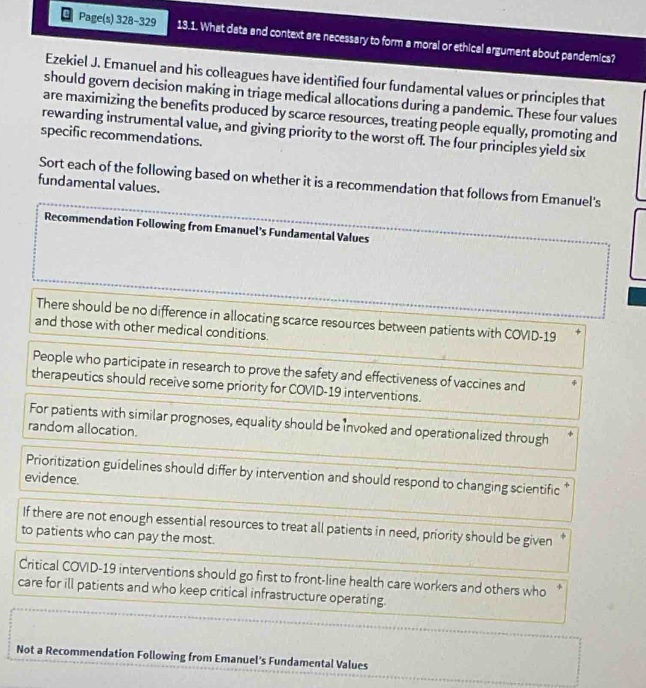
page(s) 328 - 329\n13.1. what data and context are necessary to form a moral or ethical argument about pandemics?\nezekiel j. emanuel and his colleagues have identified four fundamental values or principles that\nshould govern decision - making in triage medical allocations during a pandemic. these four values\nare maximizing the benefits produced by scarce resources, treating people equally, promoting and\nrewarding instrumental value, and giving priority to the worst off. the four principles yield six\nspecific recommendations.\nsort each of the following based on whether it is a recommendation that follows from emanuels\nfundamental values.\nrecommendation following from emanuels fundamental values\nthere should be no difference in allocating scarce resources between patients with covid - 19\nand those with other medical conditions.\npeople who participate in research to prove the safety and effectiveness of vaccines and\ntherapeutics should receive some priority for covid - 19 interventions.\nfor patients with similar prognoses, equality should be invoked and operationalized through\nrandom allocation.\nprioritization guidelines should differ by intervention and should respond to changing scientific\nevidence.\nif there are not enough essential resources to treat all patients in need, priority should be given\nto patients who can pay the most.\ncritical covid - 19 interventions should go first to front - line health care workers and others who\ncare for ill patients and who keep critical infrastructure operating.\nnot a recommendation following from emanuels fundamental values
Answer
Brief Explanations:
- "There should be no difference in allocating scarce resources between patients with COVID - 19 and those with other medical conditions" follows the principle of treating people equally.
- "People who participate in research to prove the safety and effectiveness of vaccines and therapeutics should receive some priority for COVID - 19 interventions" rewards instrumental value as these people contribute to research.
- "For patients with similar prognoses, equality should be invoked and operationalized through random allocation" adheres to treating people equally.
- "Prioritization guidelines should differ by intervention and should respond to changing scientific evidence" is in line with promoting and rewarding instrumental value as it adapts to scientific progress.
- "If there are not enough essential resources to treat all patients in need, priority should be given to patients who can pay the most" does not follow Emanuel's values as it goes against treating people equally and giving priority to the worst - off.
- "Critical COVID - 19 interventions should go first to front - line health care workers and others who care for ill patients and who keep critical infrastructure operating" gives priority to the worst - off as these are essential workers in a pandemic situation.
Answer:
Recommendation Following from Emanuel's Fundamental Values:
- There should be no difference in allocating scarce resources between patients with COVID - 19 and those with other medical conditions.
- People who participate in research to prove the safety and effectiveness of vaccines and therapeutics should receive some priority for COVID - 19 interventions.
- For patients with similar prognoses, equality should be invoked and operationalized through random allocation.
- Prioritization guidelines should differ by intervention and should respond to changing scientific evidence.
- Critical COVID - 19 interventions should go first to front - line health care workers and others who care for ill patients and who keep critical infrastructure operating. Not a Recommendation Following from Emanuel's Fundamental Values:
- If there are not enough essential resources to treat all patients in need, priority should be given to patients who can pay the most.