permit icmp any any nd-ns deny ipv6 any any refer to the exhibit. which statement describes the function of…
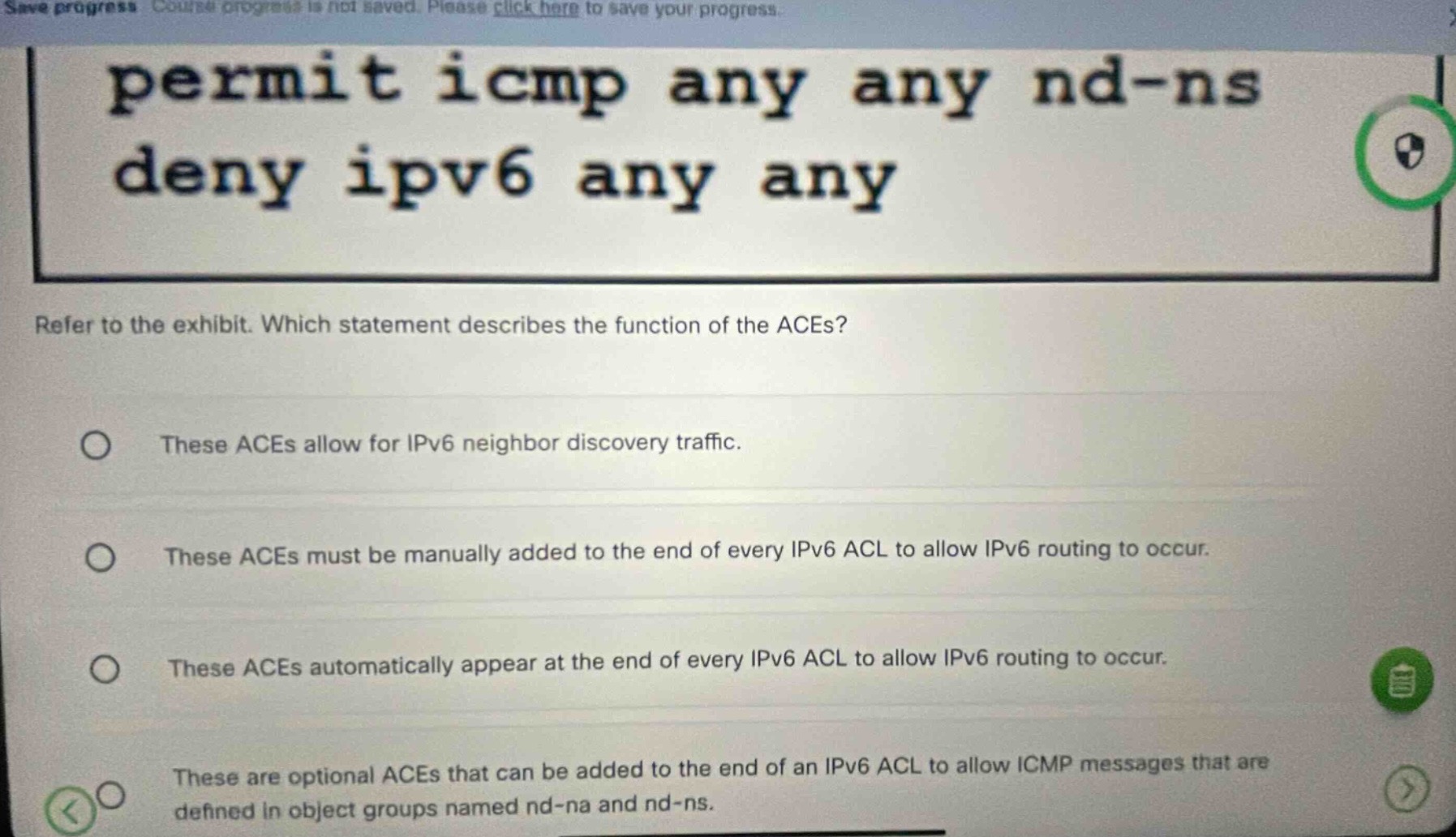
permit icmp any any nd-ns deny ipv6 any any refer to the exhibit. which statement describes the function of the aces? these aces allow for ipv6 neighbor discovery traffic. these aces must be manually added to the end of every ipv6 acl to allow ipv6 routing to occur. these aces automatically appear at the end of every ipv6 acl to allow ipv6 routing to occur. these are optional aces that can be added to the end of an ipv6 acl to allow icmp messages that are defined in object groups named nd - na and nd - ns.
Answer
Brief Explanations:
The first ACE "permit icmp any any nd - ns" allows ICMP traffic related to Neighbor Discovery - Neighbor Solicitation (nd - ns), which is part of IPv6 neighbor discovery. The second ACE "deny ipv6 any any" blocks all other IPv6 traffic. So, these ACEs allow for IPv6 neighbor discovery traffic.
Answer:
These ACEs allow for IPv6 neighbor discovery traffic.