petroleum is a natural resource that is found below the surface of the earth. petroleum is unevenly…
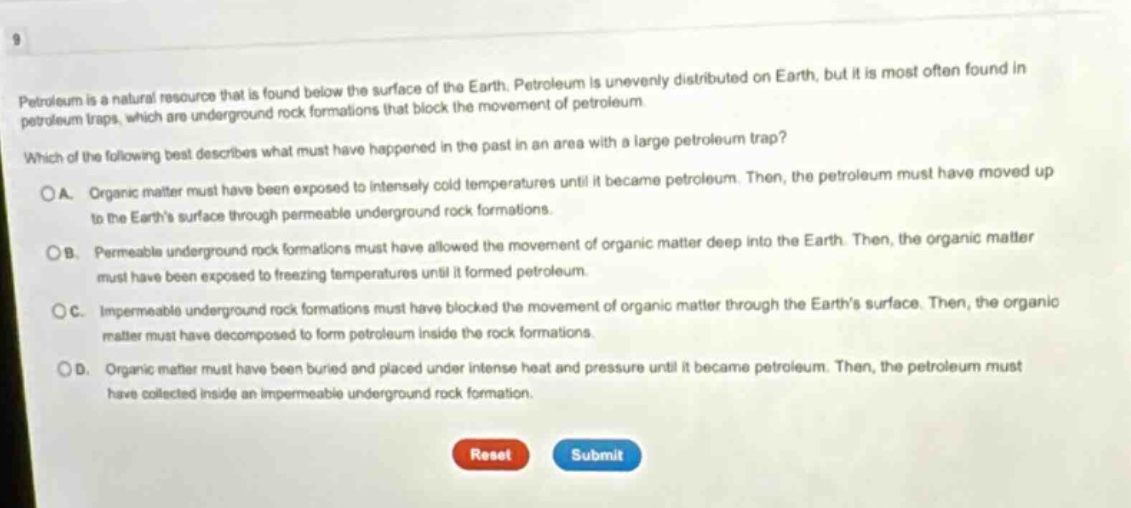
petroleum is a natural resource that is found below the surface of the earth. petroleum is unevenly distributed on earth, but it is most often found in petroleum traps, which are underground rock formations that block the movement of petroleum. which of the following best describes what must have happened in the past in an area with a large petroleum trap? o a. organic matter must have been exposed to intensely cold temperatures until it became petroleum. then, the petroleum must have moved up to the earths surface through permeable underground rock formations. o b. permeable underground rock formations must have allowed the movement of organic matter deep into the earth. then, the organic matter must have been exposed to freezing temperatures until it formed petroleum. o c. impermeable underground rock formations must have blocked the movement of organic matter through the earths surface. then, the organic matter must have decomposed to form petroleum inside the rock formations. o d. organic matter must have been buried and placed under intense heat and pressure until it became petroleum. then, the petroleum must have collected inside an impermeable underground rock formation. reset submit
Answer
Brief Explanations:
Petroleum is formed from organic - matter that undergoes heat and pressure. Petroleum traps are impermeable rock formations that block the upward movement of petroleum. Option D correctly describes the formation and trapping of petroleum. Organic matter is buried and subjected to heat and pressure to form petroleum, which then collects in an impermeable rock formation (petroleum trap). Options A and B are incorrect because cold or freezing temperatures are not involved in petroleum formation. Option C is incorrect as it is the movement of petroleum (not organic matter) that is blocked by impermeable rock formations in a petroleum - trap scenario.
Answer:
D. Organic matter must have been buried and placed under intense heat and pressure until it became petroleum. Then, the petroleum must have collected inside an impermeable underground rock formation.