5. in platform frame construction, the ends of all the joists are fastened to the ______. a. studs b. beam…
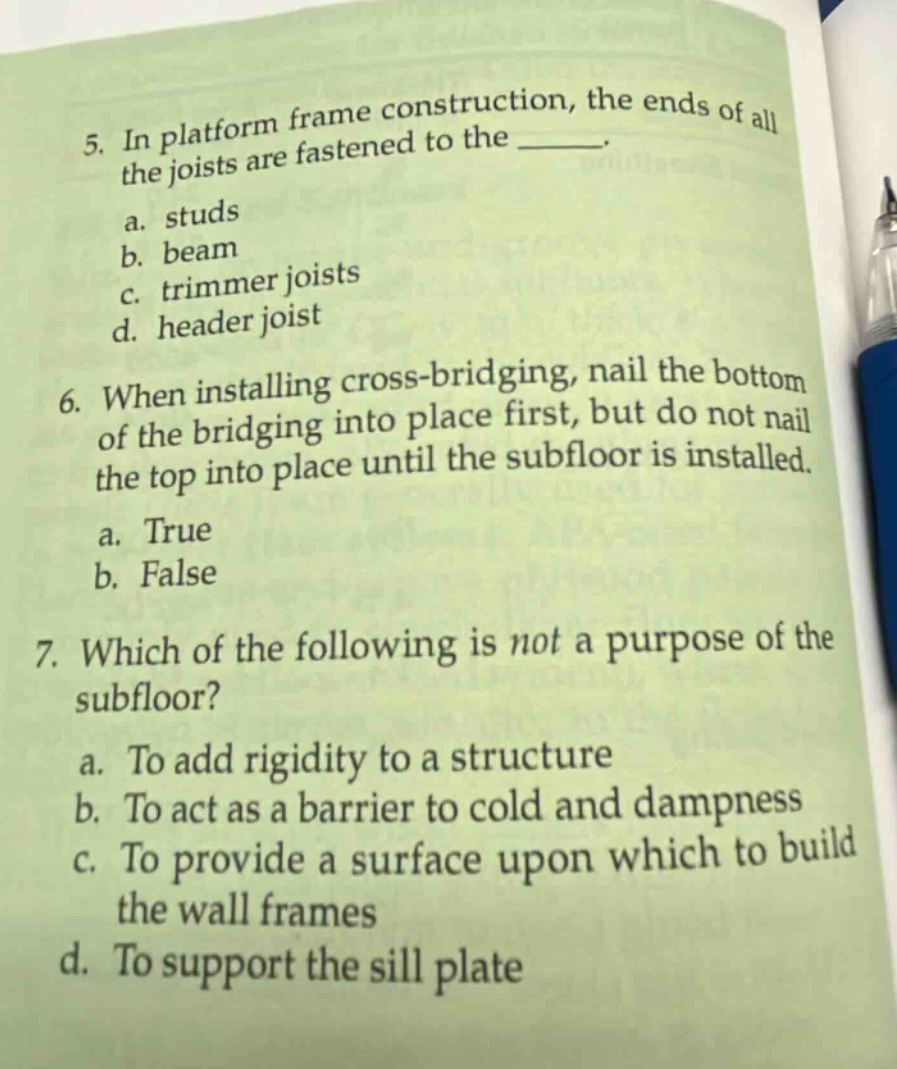
5. in platform frame construction, the ends of all the joists are fastened to the ______. a. studs b. beam c. trimmer joists d. header joist 6. when installing cross - bridging, nail the bottom of the bridging into place first, but do not nail the top into place until the subfloor is installed. a. true b. false 7. which of the following is not a purpose of the subfloor? a. to add rigidity to a structure b. to act as a barrier to cold and dampness c. to provide a surface upon which to build the wall frames d. to support the sill plate
Answer
Brief Explanations:
Question 5:
In platform - frame construction, joist ends are fastened to the header joist. It provides support and connection for the joists.
Question 6:
When installing cross - bridging, it is a standard practice to nail the bottom first and wait for subfloor installation before nailing the top.
Question 7:
The subfloor does not support the sill plate. The sill plate is usually placed on the foundation and supports the wall structure above, while the subfloor provides a base for floor coverings and adds rigidity to the structure and a surface for wall frame construction. It also helps with some insulation against cold and dampness.
Answer:
- d. header joist
- a. True
- d. To support the sill plate