premise 1: all birds have feathers. premise 2: all feathered creatures can fly. conclusion: all birds can…
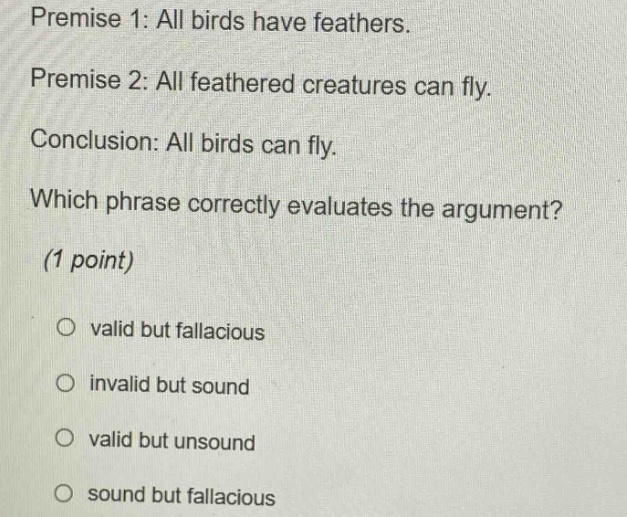
premise 1: all birds have feathers. premise 2: all feathered creatures can fly. conclusion: all birds can fly. which phrase correctly evaluates the argument? (1 point) valid but fallacious invalid but sound valid but unsound sound but fallacious
Answer
Brief Explanations:
- Validity: The argument is valid because if the premises were true, the conclusion would necessarily follow. The logical structure is such that if all birds have feathers (Premise 1) and all feathered - creatures can fly (Premise 2), then all birds can fly.
- Soundness: However, it is unsound because Premise 2 is false. Not all feathered creatures can fly (e.g., ostriches, penguins). A sound argument requires both validity and true premises.
Answer:
valid but unsound