the processes in the rock cycle create, destroy, or change rock. these processes are driven by energy. for…
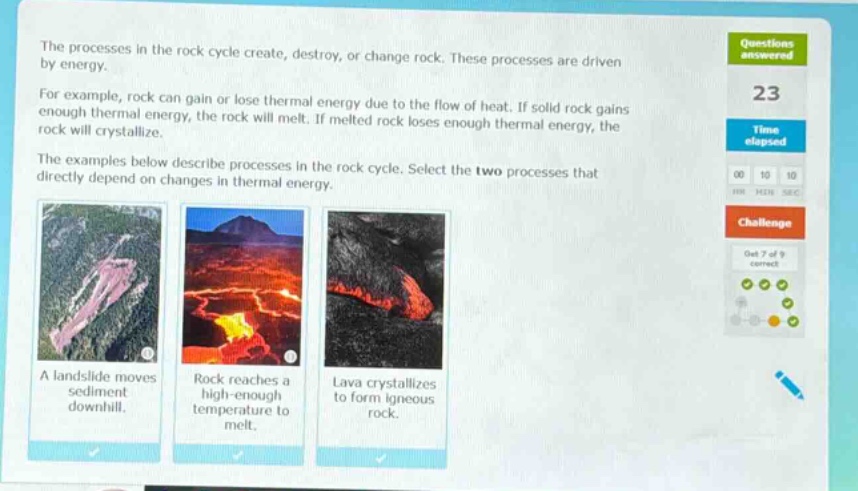
the processes in the rock cycle create, destroy, or change rock. these processes are driven by energy. for example, rock can gain or lose thermal energy due to the flow of heat. if solid rock gains enough thermal energy, the rock will melt. if melted rock loses enough thermal energy, the rock will crystallize. the examples below describe processes in the rock cycle. select the two processes that directly depend on changes in thermal energy. a landslide moves sediment downhill. rock reaches a high - enough temperature to melt. lava crystallizes to form igneous rock.
Answer
Brief Explanations:
The first option (landslide) is due to gravity, not thermal - energy changes. The second option involves rock melting when it reaches a high - enough temperature (thermal energy gain). The third option involves lava crystallizing when it loses thermal energy. So, the processes that directly depend on thermal energy changes are rock melting and lava crystallizing.
Answer:
Rock reaches a high - enough temperature to melt., Lava crystallizes to form igneous rock.