question 14 2 pts s, or shear, waves ___. vibrate perpendicular to the direction they travel move along…
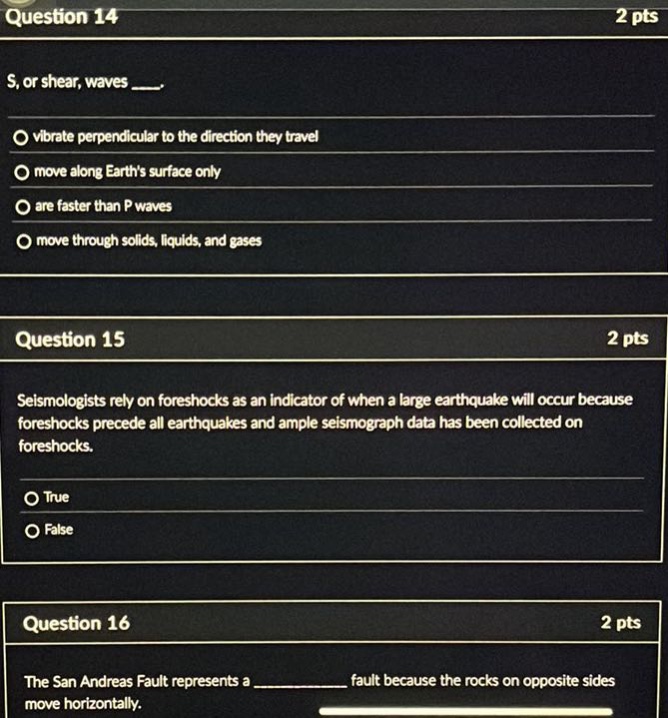
question 14 2 pts s, or shear, waves ___. vibrate perpendicular to the direction they travel move along earths surface only are faster than p waves move through solids, liquids, and gases question 15 2 pts seismologists rely on foreshocks as an indicator of when a large earthquake will occur because foreshocks precede all earthquakes and ample seismograph data has been collected on foreshocks. true false question 16 2 pts the san andreas fault represents a ____________ fault because the rocks on opposite sides move horizontally.
Answer
Brief Explanations:
For Question 14: S - waves are shear waves that vibrate perpendicular to the direction of their travel. They do not move only along Earth's surface (surface - waves do that), are slower than P - waves, and cannot move through liquids and gases. For Question 15: Not all earthquakes have foreshocks, so seismologists cannot rely on foreshocks as a definite indicator of a large earthquake.
Answer:
Question 14: vibrate perpendicular to the direction they travel Question 15: False