question 15(multiple choice worth 2 points)\n(04.04 mc)\nthe annual world seafood catch grew from…
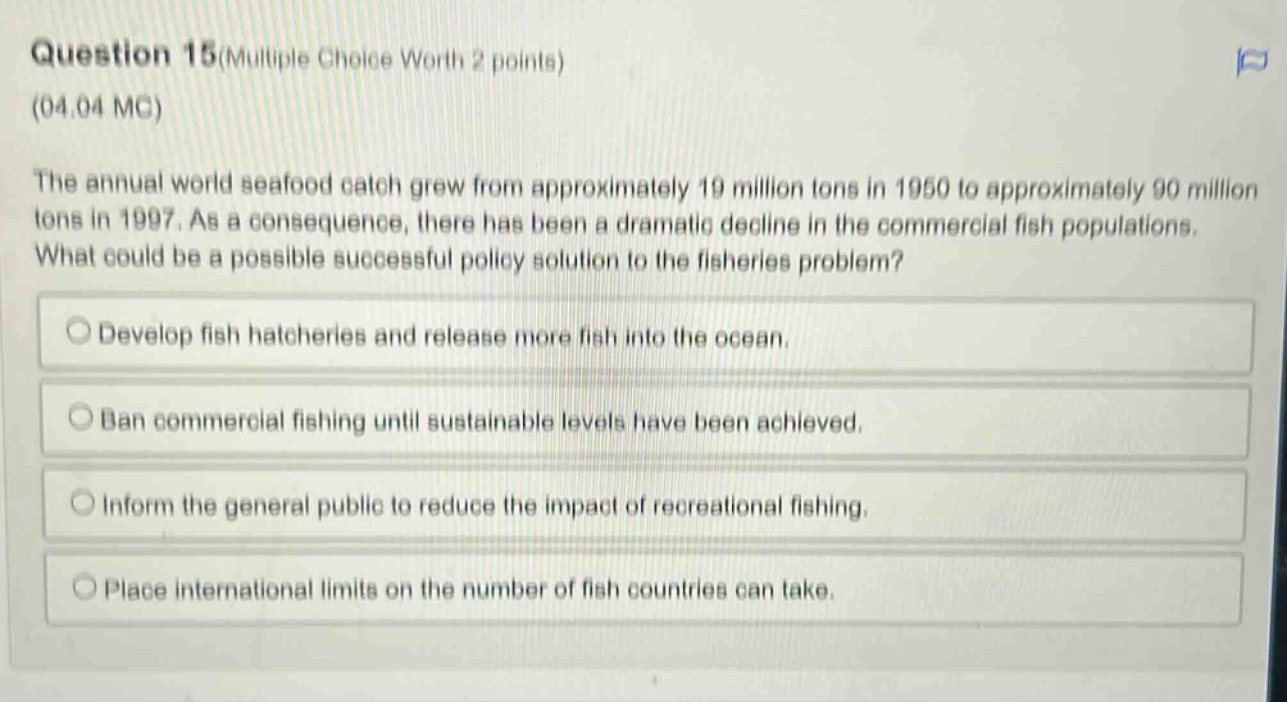
question 15(multiple choice worth 2 points)\n(04.04 mc)\nthe annual world seafood catch grew from approximately 19 million tons in 1950 to approximately 90 million tons in 1997. as a consequence, there has been a dramatic decline in the commercial fish populations. what could be a possible successful policy solution to the fisheries problem?\ndevelop fish hatcheries and release more fish into the ocean.\nban commercial fishing until sustainable levels have been achieved.\ninform the general public to reduce the impact of recreational fishing.\nplace international limits on the number of fish countries can take.
Answer
Brief Explanations:
Developing fish hatcheries and releasing more fish can replenish fish populations, but may not fully address over - fishing. Banning commercial fishing until sustainable levels are achieved is extreme and may have economic impacts. Informing the public about recreational fishing impact is less relevant as the main issue is commercial fishing. Placing international limits on the number of fish countries can take helps regulate commercial fishing and ensure sustainable catches, which is a comprehensive and effective policy solution for the fisheries problem.
Answer:
D. Place international limits on the number of fish countries can take.