question 5 of 5\nhow does crusoe differ from the english and spanish masters he left behind to develop the…
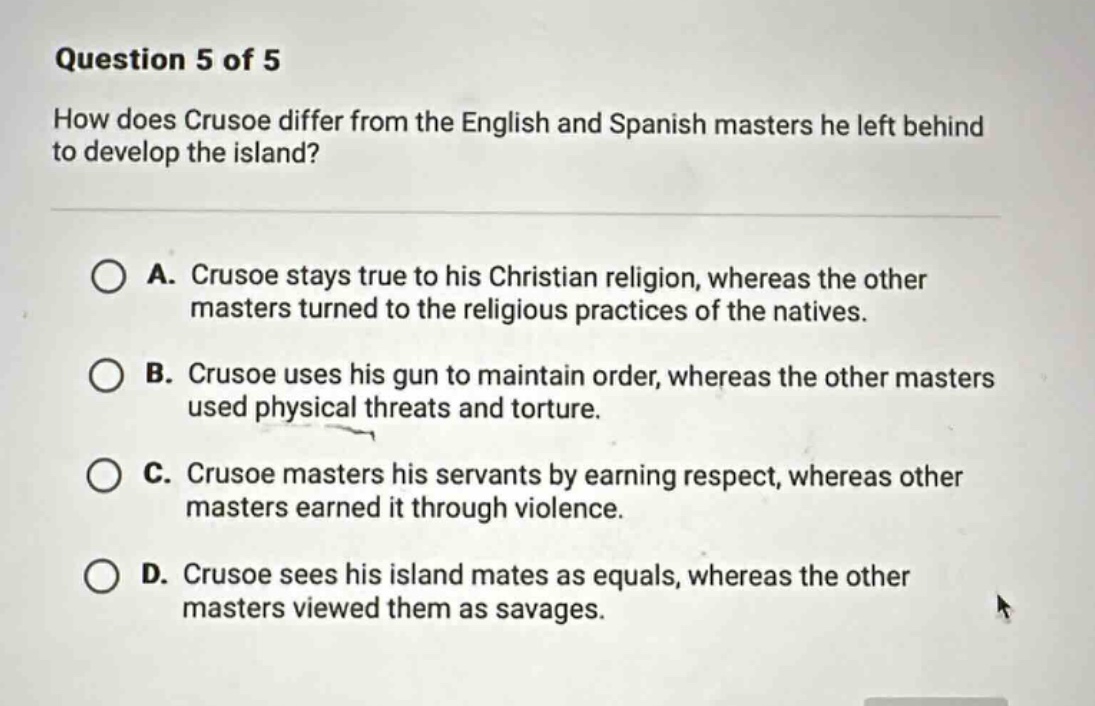
question 5 of 5\nhow does crusoe differ from the english and spanish masters he left behind to develop the island?\na. crusoe stays true to his christian religion, whereas the other masters turned to the religious practices of the natives.\nb. crusoe uses his gun to maintain order, whereas the other masters used physical threats and torture.\nc. crusoe masters his servants by earning respect, whereas other masters earned it through violence.\nd. crusoe sees his island mates as equals, whereas the other masters viewed them as savages.
Answer
Brief Explanations:
In Robinson Crusoe, Crusoe is depicted as gaining the respect of those around him on the island through his actions and character, rather than using violence like some other colonial - era masters. Option A is incorrect as there's no indication the other masters turned to native religious practices. Option B is wrong because Crusoe also used his gun for self - defense and control at times. Option D is inaccurate as Crusoe still had a master - servant mindset despite some interactions.
Answer:
C. Crusoe masters his servants by earning respect, whereas other masters earned it through violence.