read this excerpt from a passage. unfortunately, saving elephants had a negative economic effect on some…
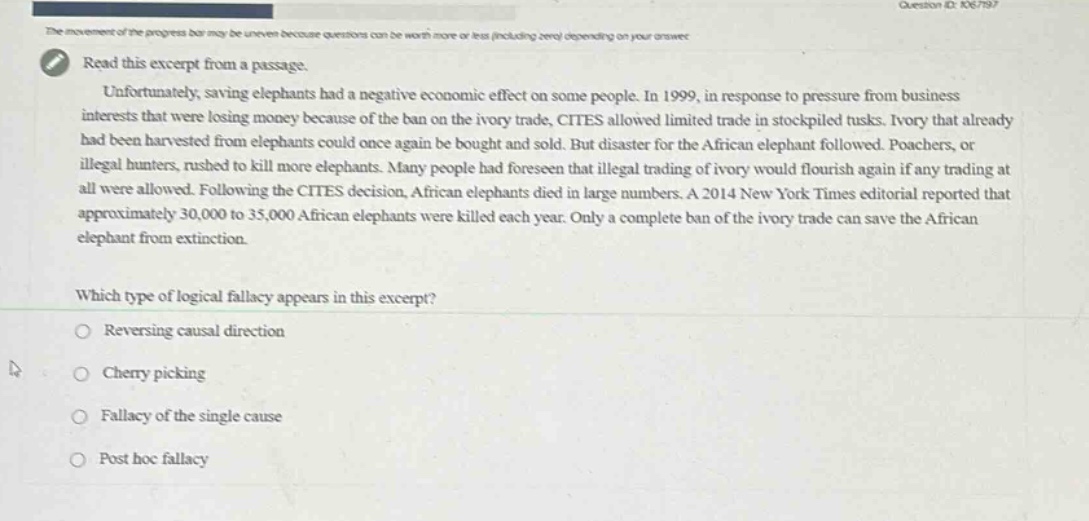
read this excerpt from a passage. unfortunately, saving elephants had a negative economic effect on some people. in 1999, in response to pressure from business interests that were losing money because of the ban on the ivory trade, cites allowed limited trade in stockpiled tusks. ivory that already had been harvested from elephants could once again be bought and sold. but disaster for the african elephant followed. poachers, or illegal hunters, rushed to kill more elephants. many people had foreseen that illegal trading of ivory would flourish again if any trading at all were allowed. following the cites decision, african elephants died in large numbers. a 2014 new york times editorial reported that approximately 30,000 to 35,000 african elephants were killed each year. only a complete ban of the ivory trade can save the african elephant from extinction. which type of logical fallacy appears in this excerpt? reversing causal direction cherry picking fallacy of the single cause post hoc fallacy
Answer
Brief Explanations:
The passage assumes that because the CITES - allowed limited trade in stockpiled tusks was followed by a large - scale killing of African elephants, the trade caused the poaching. Just because one event followed another doesn't mean the first caused the second, which is the post hoc fallacy.
Answer:
Post hoc fallacy