read the passage from chapter 1 of animal farm. \this single farm of ours would support a dozen horses…
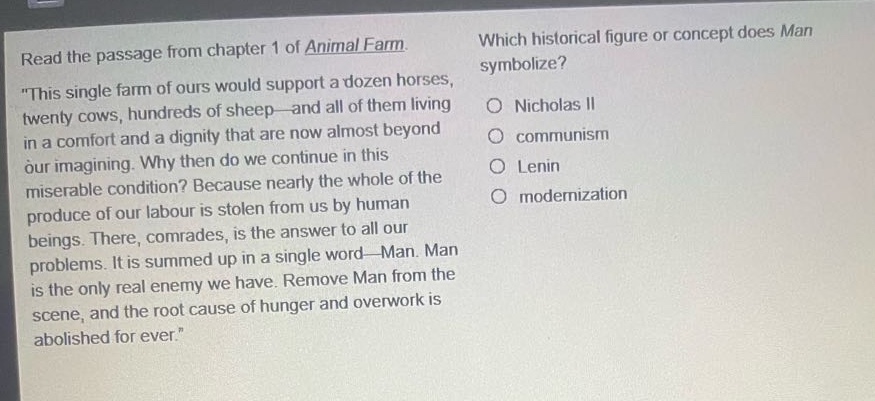
read the passage from chapter 1 of animal farm. \this single farm of ours would support a dozen horses, twenty cows, hundreds of sheep - and all of them living in a comfort and a dignity that are now almost beyond our imagining. why then do we continue in this miserable condition? because nearly the whole of the produce of our labour is stolen from us by human beings. there, comrades, is the answer to all our problems. it is summed up in a single word - man. man is the only real enemy we have. remove man from the scene, and the root cause of hunger and overwork is abolished for ever.\ which historical figure or concept does man symbolize? nicholas ii communism lenin modernization
Answer
Brief Explanations:
En Animal Farm, George Orwell utiliza la novela como una alegoría política. El "Man" representa a los seres humanos que explotan a los animales, y en el contexto histórico de la novela, que critica la Revolución Rusa y su posterior evolución, "Man" simboliza a los líderes opresores. Nicholas II era el último zar de Rusia, un símbolo de la opresión y la explotación antes de la revolución. Lenin fue un líder revolucionario, el comunismo es un sistema político - económico y la modernización es un proceso general de cambio. "Man" en la novela representa más bien a un líder opresor como Nicholas II.
Answer:
Nicholas II