read the passage. creating lake - effect snow situated on lake erie, the city of buffalo, new york, is one…
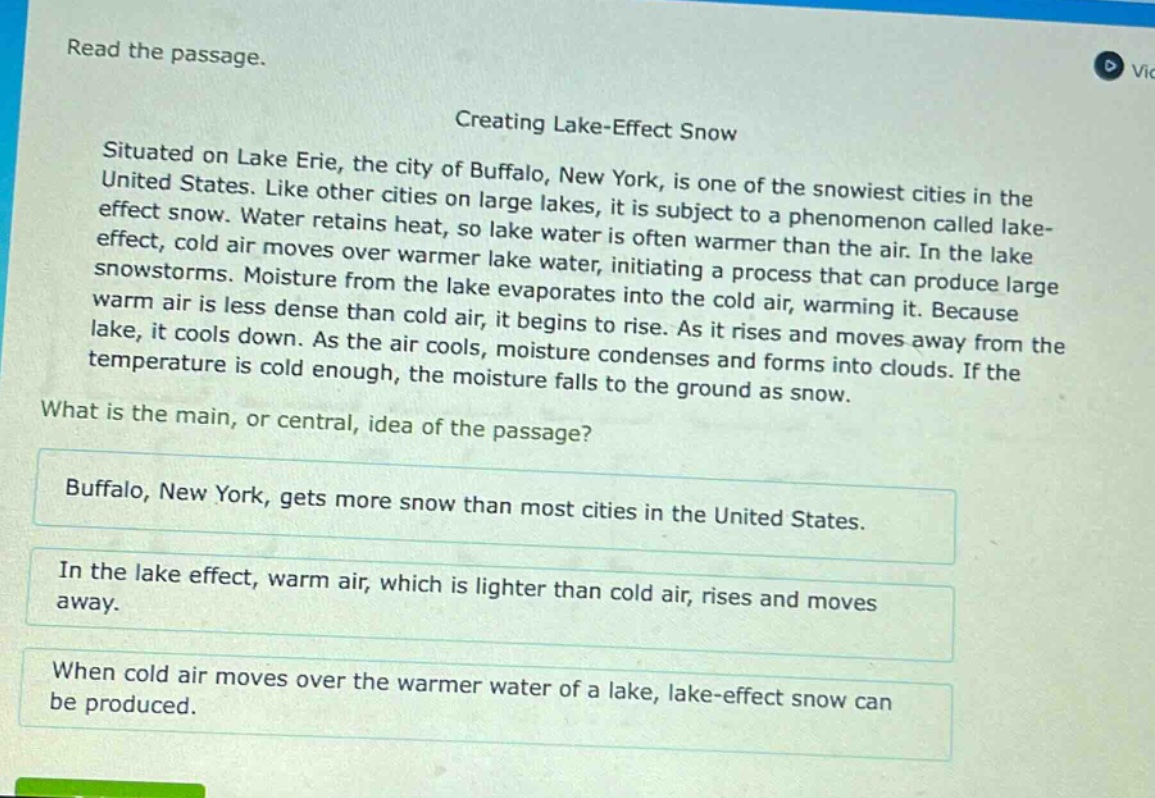
read the passage. creating lake - effect snow situated on lake erie, the city of buffalo, new york, is one of the snowiest cities in the united states. like other cities on large lakes, it is subject to a phenomenon called lake - effect snow. water retains heat, so lake water is often warmer than the air. in the lake effect, cold air moves over warmer lake water, initiating a process that can produce large snowstorms. moisture from the lake evaporates into the cold air, warming it. because warm air is less dense than cold air, it begins to rise. as it rises and moves away from the lake, it cools down. as the air cools, moisture condenses and forms into clouds. if the temperature is cold enough, the moisture falls to the ground as snow. what is the main, or central, idea of the passage? buffalo, new york, gets more snow than most cities in the united states. in the lake effect, warm air, which is lighter than cold air, rises and moves away. when cold air moves over the warmer water of a lake, lake - effect snow can be produced.
Answer
Brief Explanations:
The passage starts by introducing Buffalo's location on Lake Erie and its exposure to lake - effect snow. Then it details the process of how lake - effect snow is formed when cold air moves over warmer lake water. The main focus is on the formation of lake - effect snow.
Answer:
When cold air moves over the warmer water of a lake, lake - effect snow can be produced.