read the text. then answer the question. clams, crustaceans, and fish lived in a sea near a coral reef…
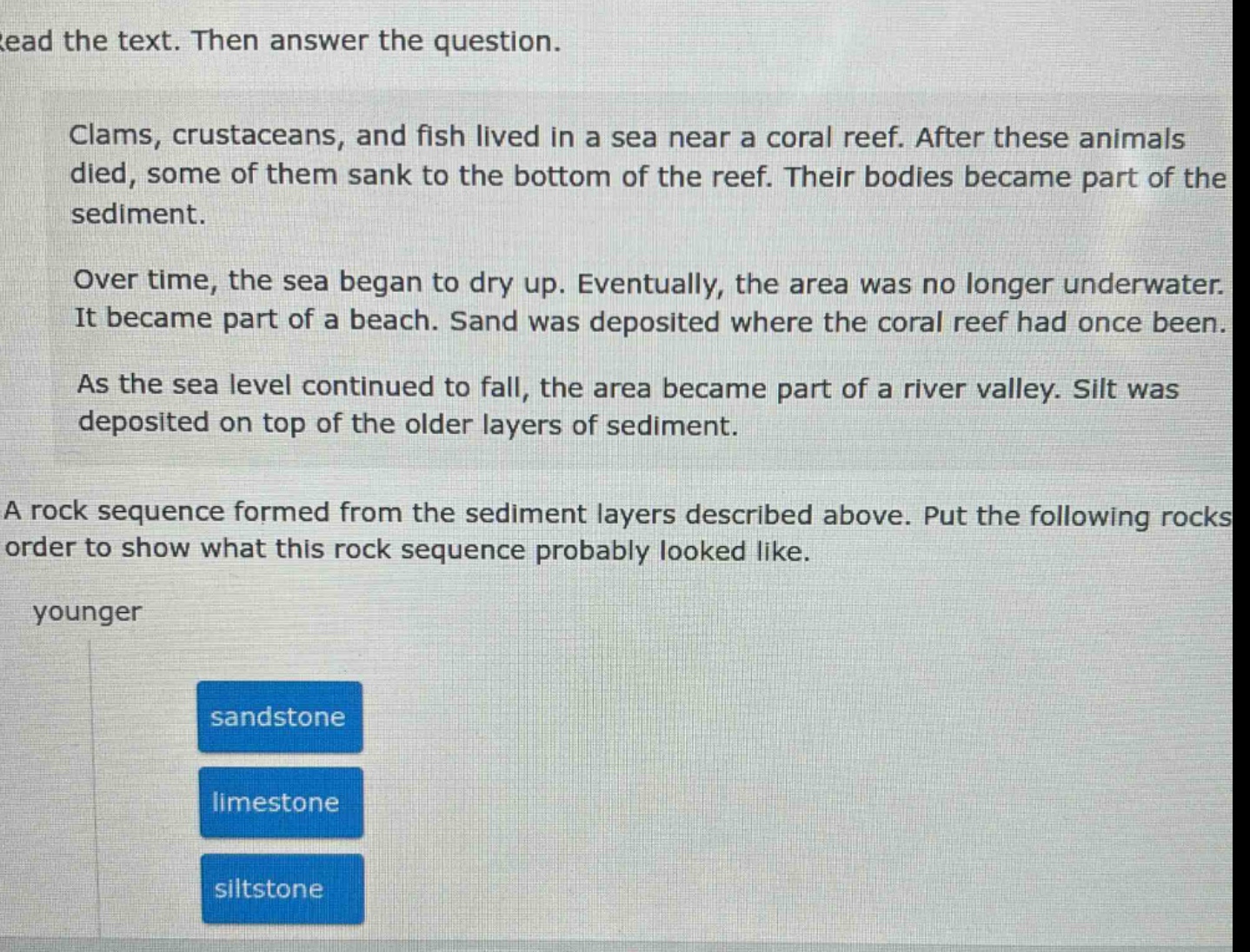
read the text. then answer the question. clams, crustaceans, and fish lived in a sea near a coral reef. after these animals died, some of them sank to the bottom of the reef. their bodies became part of the sediment. over time, the sea began to dry up. eventually, the area was no longer underwater. it became part of a beach. sand was deposited where the coral reef had once been. as the sea level continued to fall, the area became part of a river valley. silt was deposited on top of the older layers of sediment. a rock sequence formed from the sediment layers described above. put the following rocks in order to show what this rock sequence probably looked like. younger sandstone limestone siltstone
Answer
Explanation:
Step1: Identify sediment - formation order
Animals near coral reef first form limestone from their bodies in sea.
Step2: Consider sea - drying process
As sea dries up, sand is deposited forming sandstone.
Step3: Analyze sea - level fall
When sea - level falls and area becomes river valley, siltstone is deposited on top.
Answer:
siltstone, sandstone, limestone