read the text. then answer the question. wind deposited sand in a desert. over time, the environment became…
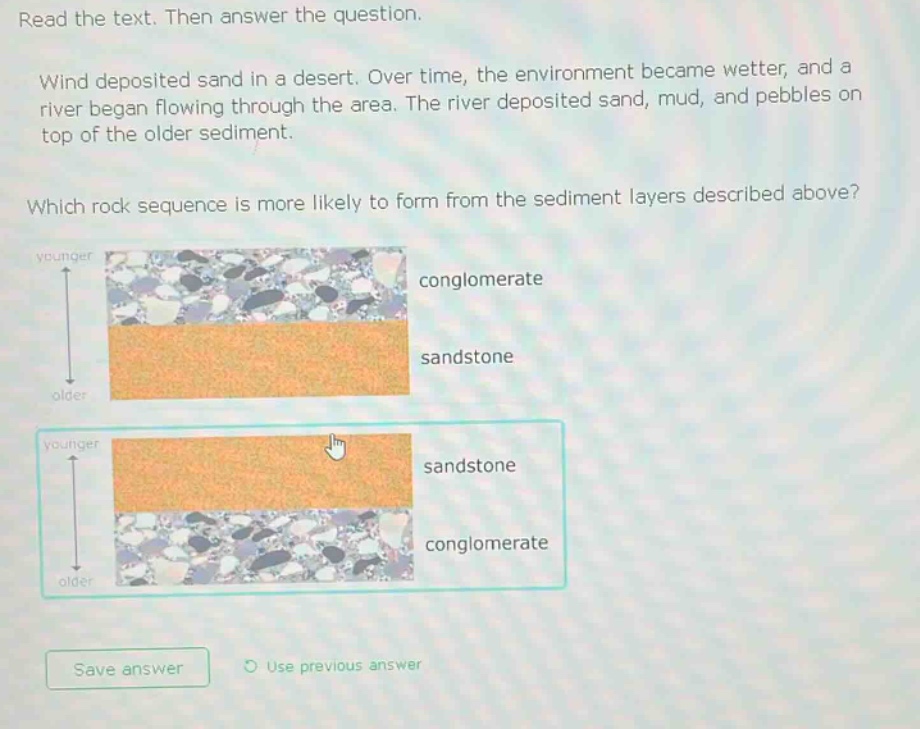
read the text. then answer the question. wind deposited sand in a desert. over time, the environment became wetter, and a river began flowing through the area. the river deposited sand, mud, and pebbles on top of the older sediment. which rock sequence is more likely to form from the sediment layers described above? younger conglomerate sandstone older younger sandstone conglomerate older save answer use previous answer
Answer
Explanation:
Step1: Identify sediment - depositing agents
Wind first deposited sand, which forms sandstone. Then a river deposited sand, mud, and pebbles which form conglomerate. Younger layers are on top of older layers in sedimentary rock formation.
Step2: Match with rock - sequence options
The older layer should be sandstone (formed by wind - deposited sand) and the younger layer should be conglomerate (formed by river - deposited materials).
Answer:
The rock sequence with sandstone on the bottom (older) and conglomerate on the top (younger) is the correct one.