read the text.\nto the naked eye, mars seems as distant as the stars. but humans may set foot on the red…
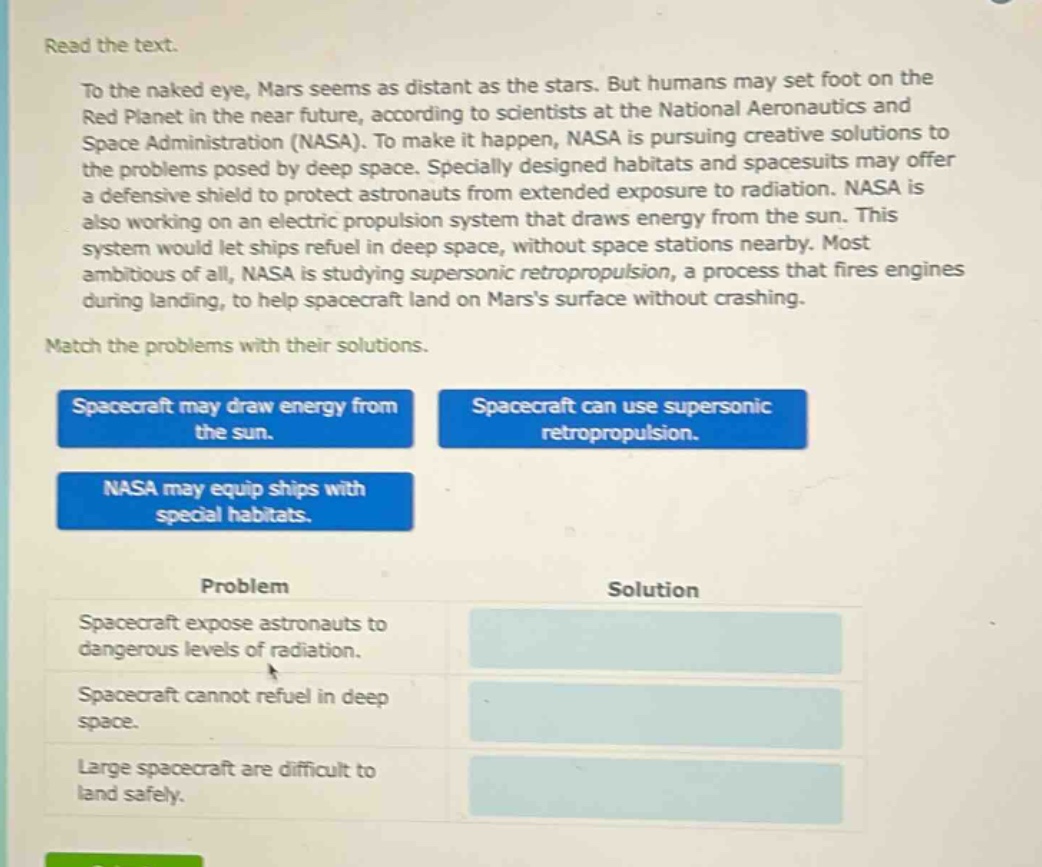
read the text.\nto the naked eye, mars seems as distant as the stars. but humans may set foot on the red planet in the near future, according to scientists at the national aeronautics and space administration (nasa). to make it happen, nasa is pursuing creative solutions to the problems posed by deep space. specially designed habitats and spacesuits may offer a defensive shield to protect astronauts from extended exposure to radiation. nasa is also working on an electric propulsion system that draws energy from the sun. this system would let ships refuel in deep space, without space stations nearby. most ambitious of all, nasa is studying supersonic retropropulsion, a process that fires engines during landing, to help spacecraft land on marss surface without crashing.\nmatch the problems with their solutions.\nspacecraft may draw energy from the sun.\nspacecraft can use supersonic retropropulsion.\nnasa may equip ships with special habitats.\nproblem\nsolution\nspacecraft expose astronauts to dangerous levels of radiation.\nspacecraft cannot refuel in deep space.\nlarge spacecraft are difficult to land safely.
Answer
Brief Explanations:
- For the problem of spacecraft exposing astronauts to dangerous radiation, the solution is that NASA may equip ships with special habitats as they can offer a defensive shield against radiation.
- For the problem of spacecraft not being able to refuel in deep - space, the solution is that spacecraft may draw energy from the sun as it allows ships to refuel without nearby space stations.
- For the problem of large spacecraft being difficult to land safely, the solution is that spacecraft can use supersonic retropropulsion as it helps spacecraft land on Mars' surface without crashing.
Answer:
Spacecraft expose astronauts to dangerous levels of radiation - NASA may equip ships with special habitats. Spacecraft cannot refuel in deep space - Spacecraft may draw energy from the sun. Large spacecraft are difficult to land safely - Spacecraft can use supersonic retropropulsion.