read the text. each rock tells a story of its formation. to determine a rock type, look for clues about its…
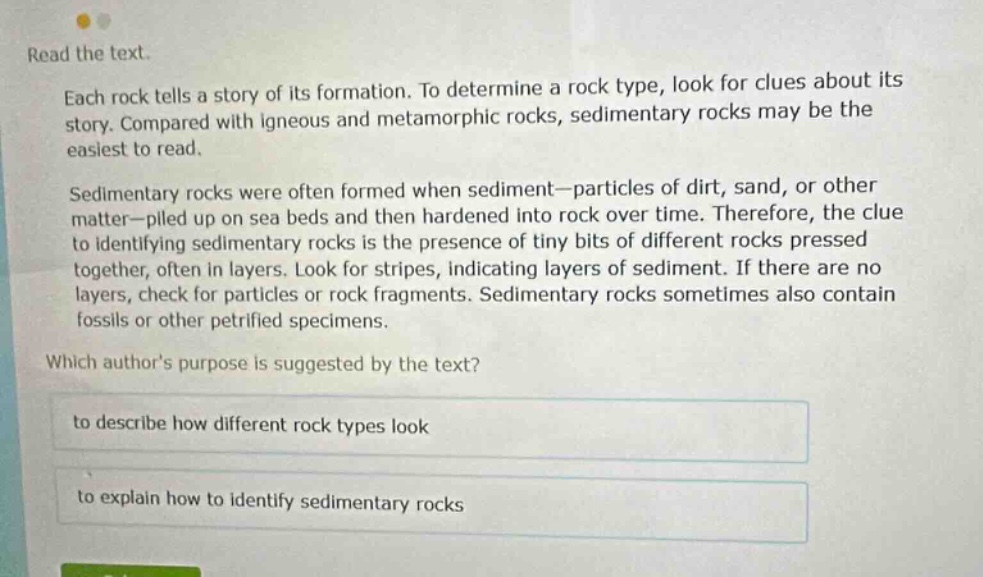
read the text. each rock tells a story of its formation. to determine a rock type, look for clues about its story. compared with igneous and metamorphic rocks, sedimentary rocks may be the easiest to read. sedimentary rocks were often formed when sediment—particles of dirt, sand, or other matter—piled up on sea beds and then hardened into rock over time. therefore, the clue to identifying sedimentary rocks is the presence of tiny bits of different rocks pressed together, often in layers. look for stripes, indicating layers of sediment. if there are no layers, check for particles or rock fragments. sedimentary rocks sometimes also contain fossils or other petrified specimens. which authors purpose is suggested by the text? to describe how different rock types look to explain how to identify sedimentary rocks
Answer
Brief Explanations:
The text focuses on giving clues like presence of layers, particles, and fossils to identify sedimentary rocks. It doesn't mainly describe how different rock - types look.
Answer:
to explain how to identify sedimentary rocks