a region of metamorphic rock lies far beneath earth’s surface. in time, which two ways can the rock make its…
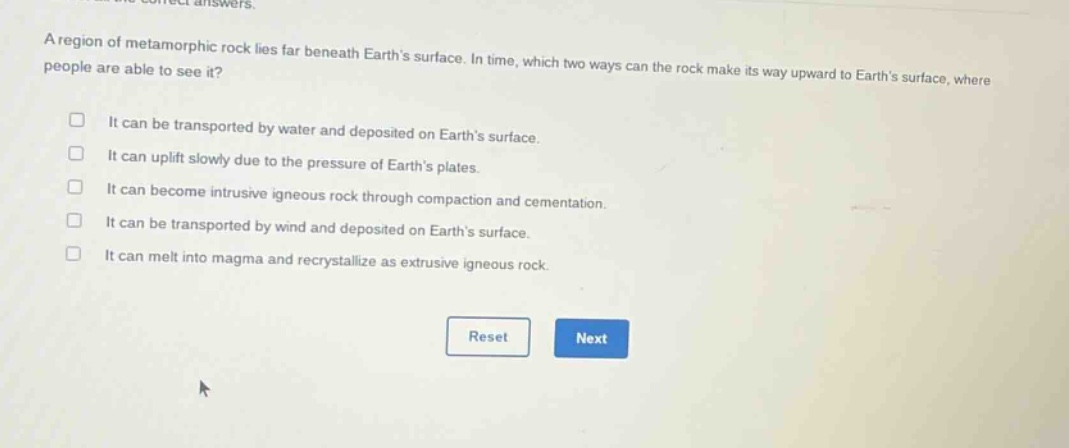
a region of metamorphic rock lies far beneath earth’s surface. in time, which two ways can the rock make its way upward to earth’s surface, where people are able to see it? it can be transported by water and deposited on earth’s surface. it can uplift slowly due to the pressure of earth’s plates. it can become intrusive igneous rock through compaction and cementation. it can be transported by wind and deposited on earth’s surface. it can melt into magma and recrystallize as extrusive igneous rock.
Answer
Brief Explanations:
Metamorphic rock deep - underground can reach the surface through plate - related uplift. Also, it can melt into magma and then erupt as extrusive igneous rock. Water and wind transportation typically move already - surface rocks or sediments, and compaction and cementation form sedimentary rock, not a way for deep metamorphic rock to reach the surface.
Answer:
It can uplift slowly due to the pressure of Earth’s plates. It can melt into magma and recrystallize as extrusive igneous rock.