repeating tests usually leads to\n○ more independent variables.\n○ more accurate measurement.\n○ more…
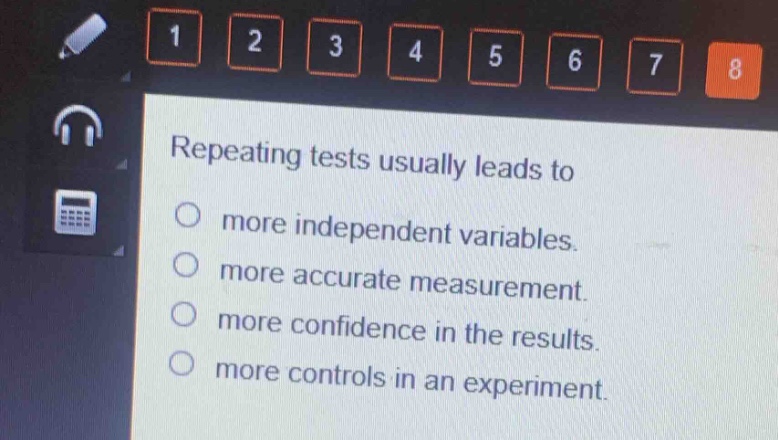
repeating tests usually leads to\n○ more independent variables.\n○ more accurate measurement.\n○ more confidence in the results.\n○ more controls in an experiment.
Answer
Brief Explanations:
Repeating tests (replication) in an experiment helps reduce the impact of random errors. It allows researchers to see if the same results can be obtained multiple - times. When results are replicated, we have more confidence that the results are not due to chance. Independent variables are determined by the experimental design, not by repeating tests. Repeating tests doesn't directly lead to more accurate measurements (though it can help identify and correct measurement errors over time). Controls are set at the start of an experiment and are not directly affected by repeating tests.
Answer:
more confidence in the results.