a rock formed on a mountain cliff near the sea. the rock was made up of grains of sand, pebbles, and…
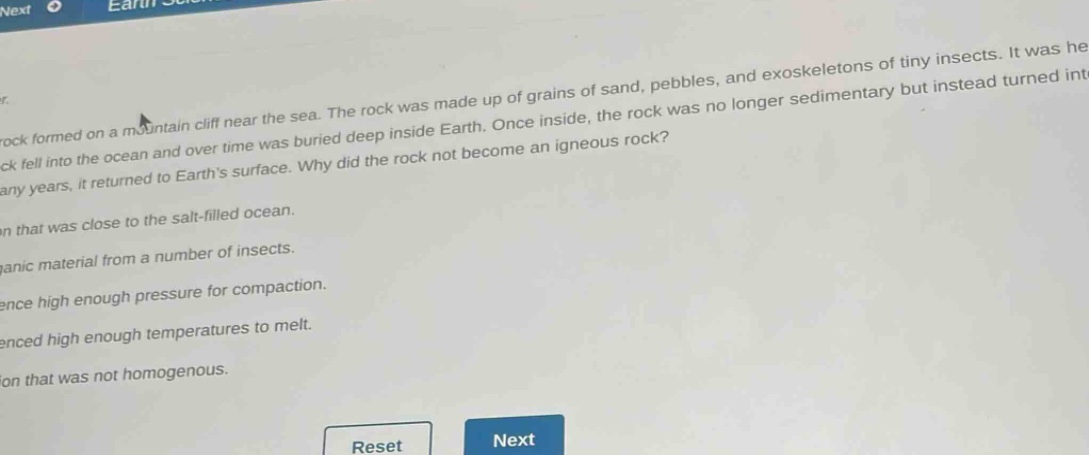
a rock formed on a mountain cliff near the sea. the rock was made up of grains of sand, pebbles, and exoskeletons of tiny insects. it was heavy. the rock fell into the ocean and over time was buried deep inside earth. once inside, the rock was no longer sedimentary but instead turned into something else. after many years, it returned to earth’s surface. why did the rock not become an igneous rock?\na. it was close to the salt - filled ocean.\nb. it had organic material from a number of insects.\nc. it did not experience high enough pressure for compaction.\nd. it did not experience high enough temperatures to melt.\ne. it was a composition that was not homogenous.
Answer
Brief Explanations:
Igneous rocks form from the cooling and solidification of molten rock (magma or lava). Since the rock in question did not experience high - enough temperatures to melt, it could not become an igneous rock.
Answer:
It did not experience high enough temperatures to melt.