a rock has most likely traveled a long origin if it is a. very small. b rounded and smooth. c. partially…
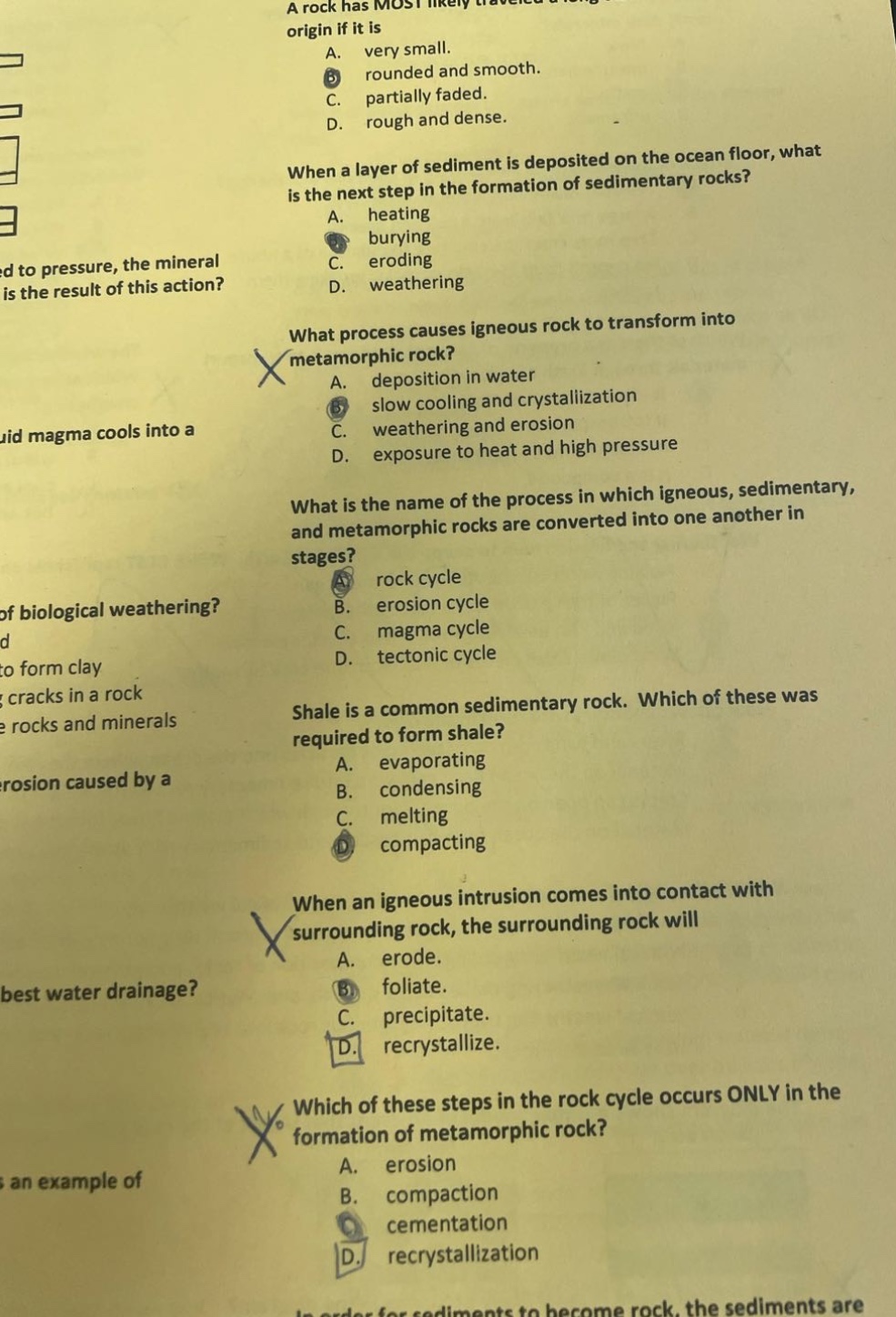
a rock has most likely traveled a long origin if it is a. very small. b rounded and smooth. c. partially faded. d. rough and dense. when a layer of sediment is deposited on the ocean floor, what is the next step in the formation of sedimentary rocks? a. heating b burying c. eroding d. weathering what process causes igneous rock to transform into metamorphic rock? a. deposition in water b slow cooling and crystallization c. weathering and erosion d. exposure to heat and high pressure what is the name of the process in which igneous, sedimentary, and metamorphic rocks are converted into one another in stages? a rock cycle b. erosion cycle c. magma cycle d. tectonic cycle shale is a common sedimentary rock. which of these was required to form shale? a. evaporating b. condensing c. melting d compacting when an igneous intrusion comes into contact with surrounding rock, the surrounding rock will a. erode. b foliate. c. precipitate. d. recrystallize. which of these steps in the rock cycle occurs only in the formation of metamorphic rock? a. erosion b. compaction c cementation d. recrystallization
Answer
Brief Explanations:
- A rock that is rounded and smooth has likely traveled a long - distance as abrasion during transportation smooths and rounds it.
- After sediment is deposited on the ocean floor, it needs to be buried under more layers for compaction and cementation to occur in sedimentary rock formation.
- Igneous rock transforms into metamorphic rock when exposed to heat and high pressure which causes changes in mineralogy and texture.
- The rock cycle is the process by which igneous, sedimentary, and metamorphic rocks are converted into one another in stages.
- Shale is formed from the compaction of fine - grained sediments like clay.
- When an igneous intrusion comes into contact with surrounding rock, the heat can cause the surrounding rock to recrystallize.
- Recrystallization occurs only in the formation of metamorphic rock among the given options as it is a result of high pressure and temperature changing the mineral structure of the rock.
Answer:
- B. rounded and smooth.
- B. burying
- D. exposure to heat and high pressure
- A. rock cycle
- D. compacting
- D. recrystallize
- D. recrystallization