a scientist is studying rock formations. she notices some unusual rocks like those pictured here. what can…
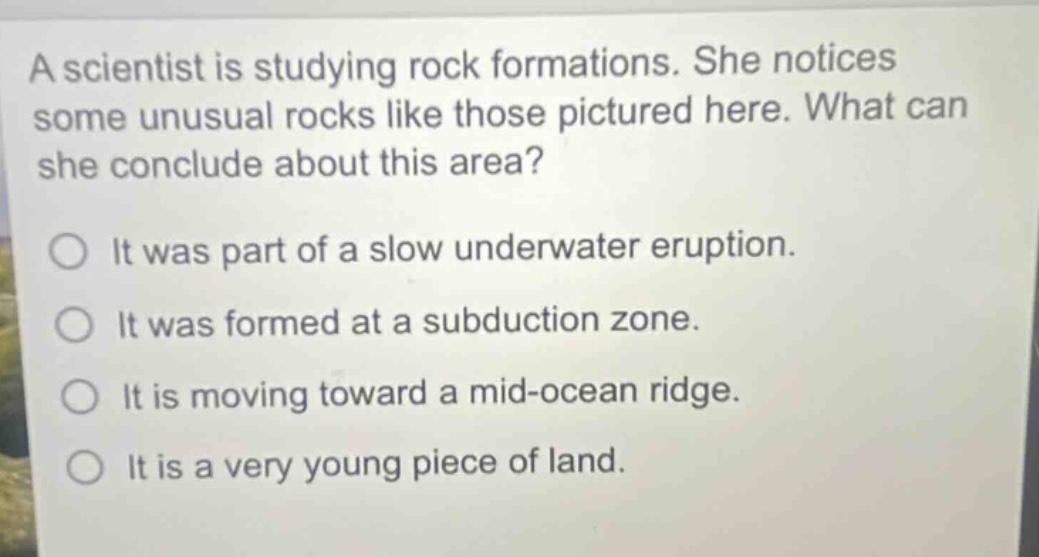
a scientist is studying rock formations. she notices some unusual rocks like those pictured here. what can she conclude about this area? it was part of a slow underwater eruption. it was formed at a subduction zone. it is moving toward a mid - ocean ridge. it is a very young piece of land.
Answer
Brief Explanations:
Subduction zones are areas where one tectonic plate moves under another. Unusual rock formations can be indicative of geological activity at such zones. Slow - underwater eruptions typically form different types of rock structures like pillow lavas. Movement towards a mid - ocean ridge is related to seafloor spreading and has different geological features. The age of land cannot be simply determined from the appearance of a few unusual rocks. So, the most likely conclusion based on rock formation analysis is related to a subduction zone.
Answer:
It was formed at a subduction zone.